Showing posts with label Canadian Dollar. Show all posts

Tuesday, October 27, 2015

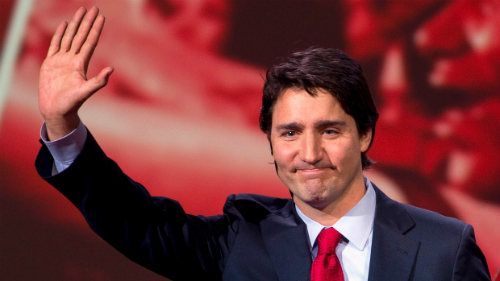
Welcome Prime Minister Trudeau! Canadian voters have decided he is ready to run this country!


Last week Canadians voted in a new federal government, led by Justin Trudeau, the son of former Prime Minister Pierre Elliot Trudeau. The fact that the CAD was down almost 2% on the week has more to do with the low inflation readings and soft oil prices than the rise in power of the traditional centrist Liberals. Canadians were able to cut through the negative ads by the ruling Conservatives portraying Trudeau as a good looking guy with “nice hair” that simply wasn’t ready to run a country. Trudeau made a point of pledging to run modest budget deficits for three years to kick-start the economy through investment in public transport, building affordable housing, and other infrastructure projects. Trudeau’s win may be a sign that the anti-austerity regime in Western governments is about to turn, especially since it’s becoming more and more obvious that central bank stimulus is running out of gas. All eyes will be on him and his government because if he can pull this off, it will be a road map for other governments to follow.

The US dollar index was on the cusp of breaking down from its recent ranges. However, it was not to be as a combination of rate cuts by the central bank of China and dovish jawboning by ECB President Mario Draghi help the USD bounce off support and surge higher to outperform the rest of the major currencies. The People’s Bank of China on Friday cut interest rates for a sixth time in a year after data last week showed that GDP grew 6.9% in the third quarter from a year earlier, the slowest pace in more than six years. China's central bank cut the benchmark rate by 25 bps on a one-year loan to 4.35%. The PBOC also increased the amount of money available for lending by reducing the level of reserves banks are required to hold. This was the latest signal of a major central bank's commitment to unusually low rates to try to spur economic growth.
Meanwhile on Thursday, ECB President Draghi sent his own strong signal that the bank is prepared to expand its stimulus program, which sent the euro down 2.96% on the week. Draghi outlined the options available: extend the end-date for QE purchases beyond the end of September 2016, increase the size of the QE program, broaden the types of bonds purchased, and/or lower the deposit beyond its current level of minus 0.2%. Like all global central banks, the ECB is worried about too-low inflation – inflation rates are barely above zero and far below the 2% rate that most consider optimal. Expectations are now set for more easing at its December policy meeting.

What War Hath Wrought

Currency wars are a zero-sum game. Who is eating whose lunch is an interesting question, but a more important query is whether the pie itself is growing. The ‘pie’ in this instance is essentially global GDP. Everyone would agree that the global economy moving forward is considerably diminished because the rate of global trade and integration is shrinking, which has been a key driver over the past 60 or so years. Growth has indeed slowed, but the only bump in the road we see in our rear-view mirror was the financial crisis of 2008/09. So, who is winning the currency war post-2009? Like we said above, currency wars are a zero-sum game, so nobody is winning. However, there has been a huge change in the currency landscape because earlier this month China’s yuan overtook Japan’s yen to become the fourth most used currency for global payments, brushing off a surprise devaluation in CNY to rise to its uppermost ranking ever and advancing its assertion for reserve status.

According to a report published in early October, the Society of World Interbank Financial Telecommunications (SWIFT), the proportion of international transactions denominated in yuan climbed to a record 2.79% in August compared to 2.34% in July. The icing on the cake for the CNY would be inclusion into the IMF’s twice-a-decade review of its Special Drawing Rights (SDR) basket, which is currently comprised of the USD, EUR, JPY and GBP. If the yuan does get included into the basket, it could mean as much as $1 trillion of inflows into the currency. Inclusion into the SDR would also likely promote more reform in China, and it is widely known that the People’s Bank of China Governor Zhou Xiaochuan is keen to liberalize the markets. Fingers crossed!

The only obstruction left to overcome to even loftier heights for the CNY is removing the barriers of foreign access to mainland China’s markets. According to Economists Tom Orlik and Fielding Chen of Bloomberg Intelligence:

The People’s Bank of China continues to come up with ingenious workarounds to promote yuan internationalization without capital-account opening. Rapid growth of the dim sum bond market means international investors don’t need to bring funds into China to buy yuan assets. Offshore yuan bond issuance rocketed to $270 billion in 2014, up 153 percent from $107 billion in 2013.

Swap agreements totaling 3.5 trillion yuan have now been signed between the PBOC and more than 30 other central banks. Currency swaps can be used by trade partners to cushion against a balance of payment crisis. As such, they reduce other central banks’ need for dollars and mean the yuan is already playing a role as a de facto reserve currency.

The start of Mutual Market Access between Shanghai and Hong Kong equity markets last year represented a step toward market opening. So far, its reception has been lukewarm, with more than 50 percent of the inbound quota and 70 percent of the outbound still unused.

The yuan’s astonishing progress into global markets validates President Xi Jinping’s determination to
test the supremacy of the dollar and a global economic order, which has been long dominated by Europe and the United States. China’s greatest incentive to pick up the pace of reform is to remove the hegemony of Western economies. The U.S. is very confident that it will never be dethroned has reprimanded China on and off for decades for keeping the yuan weak to boost exports, says it hasn’t done enough to dismantle controls. A more widely used currency would raise China’s influence in setting prices of commodities from oil to orange juice and give individuals and companies on the mainland more choice with what to do with their savings – not to mention her influence in global geopolitics. As the CNY makes its lengthy march to convertibility, China becomes susceptible to swings in the currency and money flows that could exacerbate its economic slowdown.


Monday, October 5, 2015

Water on Mars


The Canadian Dollar was the best performer last week relative to the greenback despite only a moderately positive GDP month-over-month. The real reason for the appearance of loonie strength is the fact that you can’t have a winner without a loser, and last week the greenback and Pound Sterling took the booby prizes.

The recent surge of GBP sell-off is likely being driven by the widening gap between the expected timing of the Fed rate hike and BoE’s rate hike, rather than the gradual deterioration of the UK’s economic outlook.

Noteworthy events this week include the annual Conservative Party conference which may hint at a potential date for their EU referendum. For those of you that don’t know, the UK is set to have a referendum by the end of 2017 on whether or not to remain a member of the European Union. Generally, big businesses are showing support to remain in the EU because it makes it easier for them to move products, people and money around the world. Others disagree, suggesting that an EU exit would allow the UK to negotiate trade deals as one country and not just one of 28. The British Chambers of Commerce indicated that 55% of members are backing staying in a reformed EU.

Last week, virtually any data that could suggest a growing U.S. economy was negative, including non-farm employment which came in at a disappointing 142K in contrast to the forecast of 201,000. The unemployment rate came in at 5.1% - unchanged and, hourly earnings were no good at 0.0% month-over-month. Finally, the labour force participation rate dipped to 62.4%, the lowest level since October of 1977.

A slowdown in overseas markets, a stronger dollar and lower oil prices have been hampering exports and manufacturing may be the reason why employers are hesitating before hiring more staff. Companies across the U.S. are increasingly reporting fallout from the strong U.S. dollar and slowdown in Asia. Those concerns are expected to draw heightened attention as firms begin announcing third-quarter earnings.

From WSJ

Most markedly however, this has vindicated the FED’s decision to delay an interest-rate increase last month. The central bank, which hasn’t raised rates since 2006, held off in September mainly due to worries about global weakness dwindling the U.S. economy’s strength. But the fact remains, we know Yellen wants to raise rates and, we know she will, but this data says not just yet… Perhaps the Fed will raise rates before they find water on Mars. Oh wait, NASA found that last week – or something to that effect.

In fact, the economic slowdown suggests we may not see a rate hike until January (not in October or December), and since the FED alluded to a gradual raise in borrowing costs, the hikes could continue well into 2017.

Eurozone Growth is Waning

 Final Eurozone Composite Output Index September:
53.6 (Flash 53.9, August 54.3)

 Final Eurozone Services Business Activity Index September:
53.7 (Flash 54.0, August 54.4)

The Eurozone economy continued to make steady progress in September as solid gains in output and new orders supported further job growth. However, the rate of activity grew at its weakest pace at a 4-month low. The average rate of expansion over Q3 failed to accelerate and instead equalled Q2 4-yr high. On the bright side for the European Central Bank, service firms raised prices for the first time in 4 years. Overall, the Eurozone expanded only 0.4% in Q3.

European companies slowed their pace of hiring as new business orders cooled off in Q3. Several ECB policy-makers, led by ECB President Mario Draghi, have publicly suggested in the past that the trillion EUR stimulus programme could be extended if inflation targets of 2% are not achieved. Those voices got louder last week after official data showed that Eurozone inflation slipped below 0% in September.

According to Reuters, “A [Reuters] poll last month predicted the ECB would officially extend its asset purchase program beyond September 2016 in yet another attempt to drive up inflation and rekindle growth and those calls probably grew louder after official data showed euro zone inflation slipped below zero again in September.”

Monday, February 23, 2015

USDCAD climbs to 1.2624 before easing to 1.2565


VBCE Daily Foreign Exchange Update for Monday, Feb. 23rd, 2015

USDCAD spot rate: 1.2568 - 1.2573 (AS AT 8:18AM PST)

RANGES:
Asia:
1.2523
to
1.2561
 
Europe:
1.2549
to
1.2612
 
North America:
1.2568
to
1.2624

Technical Support / Resistance:

S2
S1
R1
R2
1.2420
1.2520
1.2625
1.2713

Key Economic Data Releases:

-U.S. existing home sales: 4.82 million (exp. 4.97 million)
-U.S. existing home sales change: -4.9% (exp. -0.8%)

Key Event Calendar:

DATE
CANADA
U.S.A.


Feb. 24
Bank of Canada speech
Markit services PMI, consumer confidence
Feb. 25
 
New home sales
Feb. 26
Consumer price index
CPI, durable goods, jobless claims
Feb. 27
 
GDP, Chicago PMI, consumer sentiment

On Friday, USDCAD traded from 1.2498 down to 1.2422 before effectively erasing its weekly gains with a move up to 1.2565 driven by weak Canadian retail sales data. The pairing eased lower to 1.2510 and closed the week near 1.2525. After 3 straight weeks of gains, oil ended lower on the week after several failed attempts to sustain a break above $54/barrel. Also, the Baker Hughes oil rig count declined albeit at a slower pace. Overnight, USDCAD climbed to 1.2612 as oil remained under pressure down as much as 4.5% on the day. The pairing opened the North American session at 1.2587, climbed to 1.2624, and then fell back to 1.2570. Another attempt at 1.2600 failed at 1.2591 and we’ve fallen back to 1.2570 as oil recovers some of its earlier losses. There is speculation that the poor retail sales data could lead to another Bank of Canada interest rate cut on March 4TH. There is a Bank of Canada speech tomorrow that may shed some light as to the Bank’s comfort level with recent Canadian data and the recovery in oil prices. Currently, the TSX and the DJIA are down 0.15% and 0.21% respectively. EURCAD is unchanged trading between 1.4185 and 1.4300. GBPCAD is up 0.70% trading between 1.9276 and 1.9447. JPYCAD is up 0.45% trading between 0.01050 and 0.01060. Gold is unchanged trading between $1,191 and $1,210USD/oz, silver is up 1% trading between $16.11 and $16.62USD/oz, while oil is down 3%, trading between $48.69 and $50.96.

Sources: Reuters, Bloomberg, FXStreet, RBC Capital Markets, Bank of Canada, U.S. Federal Reserve, CNBC, Forexlive


Friday, January 23, 2015

VBCE Daily Foreign Exchange Update for Friday, Jan. 23rd, 2015


USDCAD spot rate: 1.2397 - 1.2402 (AS AT 8:40AM PST)

RANGES:
Asia:
1.2360
to
1.2409
 
Europe:
1.2368
to
1.2428
 
North America:
1.2380
to
1.2457

Technical Support / Resistance:

S2
S1
R1
R2
1.2200
1.2314
1.2457
1.2504

Key Economic Data Releases:
-Canada retail sales: 0.4% (exp. -0.2%) ex autos: 0.7% (exp. 0.1%)
-Canada consumer price index m/m: -0.7% (exp. -0.6%) y/y: 1.5% (exp. 1.5%)
-Bank of Canada CPI core m/m: -0.3% (exp. -0.4%) y/y: 2.2% (exp. 2.2%)
-U.S. leading indicators: 0.5% (exp. 0.4%)
-U.S. existing home sales: 5.04 million (exp. 5.06 million) % change: 2.4% (exp. 2.4%)
-U.S. Markit manufacturing: 53.7 (exp. 54.0)

Key Event Calendar:

DATE
CANADA
U.S.A.


Jan. 26
 
 
Jan. 27
 
Durable goods orders, Markit services PMI,
 
 
consumer confidence, new home sales
Jan. 28
 
Fed interest rate decision
Jan. 29
 
Jobless claims, pending home sales
Jan. 30
GDP
GDP, consumer sentiment index

Yesterday, USDCAD remained volatile in a 1.2314 – 1.2389 range after the European Central Bank introduced stimulus measures of EUR60 billion / month to start March 2015 and end in Sept. 2016. Part way through the North American session, USDCAD broke higher reaching 1.2420 before easing back towards 1.2365. Overnight, the pairing climbed to 1.2457 ahead of the 5:30am Canadian data release. Inflation data was close to expectation while retails sales beat estimates sending USDCAD down to 1.2380. The move was short lived with the pairing bouncing to 1.2417. USDCAD appears to be stalling at this level and has since fallen back to 1.2395/1.2400. Currently, the TSX is up 0.33% while the DJIA is down 0.27%. EURCAD is down 0.70% trading between 1.3805 and 1.4095. GBPCAD is up 0.35% trading between 1.8530 and 1.8663. JPYCAD is up 0.80% trading between 0.01041 and 0.01056. Gold is down 0.85% trading between $1,284 and $1,302USD/oz, silver is down 0.57% trading between $18.12 and $18.40USD/oz, while oil is unchanged, trading between $45.38 and $47.73.

Sources: Reuters, Bloomberg, FXStreet, RBC Capital Markets, Bank of Canada, U.S. Federal Reserve, CNBC, Forexlive


Friday, January 16, 2015

USDCAD makes gains to 1.2045 before falling back to 1.1970


VBCE Daily Foreign Exchange Update for Friday, Jan. 16th, 2015

USDCAD spot rate: 1.1970 - 1.1975 (AS AT 8:00AM PST)

RANGES:
Asia:
1.1955
to
1.1984
 
Europe:
1.1961
to
1.1999
 
North America:
1.1966
to
1.2046

Technical Support / Resistance:

S2
S1
R1
R2
1.1733
1.1800
1.2046
1.2200

Key Economic Data Releases:

-U.S. consumer price index m/m: -0.4% (exp. -0.4%) y/y: 0.8% (exp. 0.7%)
-U.S. CPI ex food & energy m/m: 0.0% (exp. 0.1%) y/y: 1.6% (exp. 1.7%)
-U.S. industrial production: -0.1% (exp. 0.0%)
-U.S. consumer sentiment index: 98.2 (exp. 94.1)
- U.S. producer price index m/m: -0.3% (exp. -0.4%) y/y: 1.1% (exp. 1.0%)

Key Event Calendar:

DATE
CANADA
U.S.A.


Jan. 19
Net foreign securities transactions
Martin Luther King Day
Jan. 20
Manufacturing shipments
 
Jan. 21
Bank of Canada interest rate
Building permits, housing starts
Jan. 22
 
Jobless claims, housing price index
Jan. 23
CPI, retail sales
Markit mfg PMI, existing home sales

Yesterday, USDCAD traded from 1.1940 up to 1.1994 before falling to 1.1803. Oil continued its 3rd day of gains reaching $51.44 in the immediate after-math of the Swiss National Bank announcement. Markets were taken by surprise when the SNB removed its 3 year old cap of 1.20 for EURCHF. In one of the most volatile days on record, oil dropped back to $46 within hours of reaching $51.44 and USDCAD quickly bounced back above 1.1900 reaching 1.1970 in late North American trade. The pairing broke above 1.20 this morning making gains to 1.2046 before falling back to 1.2005. A 2ND attempt higher stalled at 1.2030 as oil made gains to $48 and USDCAD dropped back to 1.1970. The worst performing currency is the EURO for the 2ND straight day with EURUSD reaching an 11 year low. Currently, the TSX is up 1.14% while the DJIA is unchanged. EURCAD is down 1.2% trading between 1.3755 and 1.3964. GBPCAD is down 0.35% trading between 1.8090 and 1.8279. JPYCAD is down 1.15% trading between 0.01017 and 0.01033. Gold is up 1% trading between $1,255 and $1,278USD/oz, silver is up 2.53% trading between $16.90 and $17.60USD/oz, while oil is up 2.55%, trading between $45.99 and $48.79.

Sources: Reuters, Bloomberg, FXStreet, RBC Capital Markets, Bank of Canada, U.S. Federal Reserve, CNBC, Forexlive


Wednesday, January 14, 2015

USDCAD holds near 5.5 year highs between 1.1927 - 1.2017


VBCE Daily Foreign Exchange Update for Wednesday, Jan. 14th, 2015


USDCAD spot rate: 1.1947 - 1.1952 (
AS AT 8:53AM PST)


RANGES:
Asia:
1.1948
to
1.2009
 
Europe:
1.1960
to
1.2017
 
North America:
1.1927
to
1.1982

Technical Support / Resistance:

S2
S1
R1
R2
1.1800
1.1927
1.1984
1.2200

Key Economic Data Releases:

-U.S. retail sales: -0.9% (exp. -0.1%) ex autos: -1.0% (exp. 0.0%)

-U.S. business inventories: 0.2% (exp. 0.2%)

Key Event Calendar:

DATE
CANADA
U.S.A.


Jan. 15
 
Initial jobless claims, producer price index
Jan. 16
 
CPI, industrial production, consumer sentiment

Yesterday, USDCAD traded from 1.1943 up to 1.1993 only to fall back to 1.1926 as oil prices staged a recovery bouncing from $44.23 up to $46.37. With equity markets reversing course part-way into the North American session, (DJIA saw a 300+ pt reversal) USDCAD bounced to hold a 1.1940/1.1970 range where it remained for the balance of the session. Overnight, copper prices dropped by as much as 8% (now down about 4%) and the JPY and USD rallied vs. the commodity based currencies. USDCAD briefly broke above 1.20 in late Asian / early European trade. The move was short-lived and USDCAD fell back to 1.1960 - below a key 1.1984 technical level. U.S. retail sales were weaker than expected and the World Bank revised its 2015 world economic growth forecast lower from 3.4% to 3.0%. The USD broadly weakened taking USDCAD down to 1.1927. The pairing was unable to break below this technical channel trend line for the 2ND straight day and has bounced to 1.1963. With oil prices remaining firm today (a dip to $45.04 was followed by a rise to $46.81), USDCAD has managed to dip back to 1.1940 and is currently holding a 1.1940 – 1.1960 range. Currently, the TSX and the DJIA are down 1.38% and 1.37% respectively. EURCAD is up 0.15% trading between 1.4058 and 1.4162. GBPCAD is up 0.50% trading between 1.8117 and 1.8245. JPYCAD is up 1% trading between 0.01013 and 0.01029. Gold is up 0.36% trading between $1,225 and $1,244USD/oz, silver is down 1% trading between $16.55 and $17.08USD/oz, while oil is up 0.37%, trading between $45.04 and $46.81.

Sources: Reuters, Bloomberg, FXStreet, RBC Capital Markets, Bank of Canada, U.S. Federal Reserve, CNBC, Forexlive