Showing posts with label ECB. Show all posts

Tuesday, December 8, 2015

Don't say we didn't warn you...


Over Promised and Under -Delivered

Sometimes our crystal ball is a little less murky. In last week's blog post, we essentially laid it all out for you. We stated: "One has to wonder if this week's ECB meeting will be the catalyst for the change in trend. With the market currently priced for perfection, i.e. an ECB move, there is scope for disappointment. "That is exactly what transpired - in the lead up to the ECB policy meeting ECB President, Mario Draghi, went out of his way to express his sense of urgency to do something big. Trial balloons were even launched about a two-tier deposit rate scheme, but it was not to be. Draghi simply overpromised and under-delivered, causing a massive short squeeze in the Euro. Was this his intention? Probably not. According to a Reuters article, Draghi's public stance of urgency ahead of the meeting was his way of trying to pressure the more conservative members of Governing Council to take bigger action. In the end, he was rebuffed. Hence, you see the under-delivery.

 In last weeks blog we stated: "our Spidey senses tingle when everything seems to be a foregone conclusion... with the majority of the market leaning the same way, it is entirely possible for a correction to ensue resulting from either disappointing ECB action or Fed hike uncertainty due to Friday's U.S. jobs report" And what a correction it induced! The Euro squeezed higher by 4 big figures moving from around the 1.0550 level ahead of the ECB announcement to over the 1.0950 level by the end of the trading day. That was the biggest gain in the Euro in more than six years.

Please don't mistake the market's reaction to the ECB move - the move was a reaction due to market positioning  not to the ECB move itself. The bottom line is that the ECB did make a move to ease monetary policy once more. Specifically, they made four moves. First, they cut the deposit rate by 10 basis points from -.0.20 to -0.30. Second, they extended by six months the end date of the current QE program from September 2016 to March 2017. Next, they broadened the range of securities that can be bought to include regional bonds. Finally, they stated that they intended to reinvest maturing bonds similar to the Bank of England and the Fed. Needless to say, policy divergence between the ECB and the rest of the central banks is alive and well.


The market was so convinced of an ECB move that the Swiss franc ended up the big loser in pre-ECB trading. CHF was sold aggressively in anticipation of matching move by the Swiss National Bank (SNB), whose next meeting is scheduled for December 10. Since the ECB didn't go full throttle, the pressure is off the SNB at this week's policy meeting. This has allowed the CHF to be last week's best performing currency with a gain of 3.37%. Meanwhile, the yen squeaked by the USD to finish in last place last week as the ECB disappointment led to a correction as market players shed the safety of the USD and yen. With the holiday season upon us and a light calendar for the U.S. in the week ahead, we suspect the correction will endure at least until the Fed meeting on December 16th.

IMF Adds China’s Yuan to World’s Top Currencies

In our blog post from November 16, we discussed the possibility of the IMF including the Chinese Yuan into the IMF's Special Drawing Rights (SDR) basket of currencies, which includes the USD, GBP, EUR and JOY. On November 30th, the IMF made their decision and the CNY is officially in.

Mover over euro! The CNY is mainly replacing part of the euro's role in the SDR. This is an important milestone in the integration of the Chinese economy into the global financial system. With this, China becomes more exposed to the risks associated with capital flows - particularly those flows associated with money leaving the country, but the following benefits will remain:

1. Increase in trade settlement in Chinese Yuan
2. Global Central Bank will increase their exposure in Yuan.
3. Reconfirm the importance of Chinese economy in context to world trade.
4. Strengthening the political prowess of China on world stage.


Tuesday, December 1, 2015

USD Continues to Shine

The USD continued to shine during the American Thanksgiving holiday-thinned week. The market continued to bid the USD higher driving home the notion of monetary policy divergence between the U.S. Federal Reserve and other central banks. It appears that the market is fully pricing in the Fed’s first interest rate hike in nine years on December 16th. The divergence theme is set to be reinforced this week with the European Central Bank policy meeting on Thursday, where expectations are very high that the ECB is ready to act.

And this brings us to the reason why the Swiss franc was the weakest of the major currencies last week. The market is so convinced of an ECB move that it has sold off the CHF in anticipation that the Swiss National Bank will quickly follow any ECB action with one of its own at its next scheduled meeting is December 10. We don’t know about you, but our Spidey senses tingle when everything seems to be a foregone conclusion. As it stands right now, the market appears to be fully pricing in an ECB move and a Fed hike. In marketspeak – these are expectations that have been discounted by the market. Thus, with the majority of the market leaning the same way, it is entirely possible for a correction to ensue resulting from either disappointing ECB action or Fed hike uncertainty due to Friday’s U.S. jobs report.

One has to wonder if this week’s ECB meeting will be the catalyst for the change in trend. With the market currently priced for perfection, i.e. an ECB move, there is scope for disappointment. If ECB President Mario Draghi underwhelms expectations then a short squeeze will ensue. The question then becomes is this a shakeout that provides investors with a better position, or a swan song for the USD and the monetary divergence theme?

This coming week is one of the most important weeks of the year, which could set the stage for 2016. It’s a big week data-wise with the IMF’s approval of CNY inclusion in the SDR earlier today (see our blog post from Nov. 16, 2015) ISM manufacturing report on Tuesday, ISM service report on Wednesday, ECB decision on Thursday, and the jobs report on Friday. Let’s see where the price
action takes us.

United Nations of Debt

(From World Economic Forum)

For much of the year, investors have been fixated on when the Fed will achieve “liftoff” – that is, when it will raise interest rates by 25 basis points, or 0.25%, as a first step toward normalizing monetary conditions. Markets have soared and plummeted in response to small changes in Fed statements perceived as affecting the likelihood that liftoff is imminent.
But, in seeking to gauge changes in US monetary conditions, investors have been looking in the wrong place. Since mid-August, when Chinese policymakers startled the markets by devaluing the renminbi by 2%, China’s official intervention in foreign-exchange markets has continued, in order to prevent the currency from falling further. The Chinese authorities have been selling foreign securities, mainly United States Treasury bonds, and buying up renminbi.
This is the opposite of what China did when the renminbi was strong. Back then, China bought US Treasury bonds to keep the currency from rising and eroding the competitiveness of Chinese exporters. As a result, it accumulated an astounding $4 trillion of foreign reserves.

The effects of these purchases attracted considerable attention. In 2005, US Federal Reserve Chair Alan Greenspan pointed to the phenomenon as an explanation for his famous “conundrum”: interest rates on Treasury bonds were lower than market conditions appeared to warrant. His successor, Ben Bernanke, similarly pointed to purchases of US debt by foreign central banks and governments as a reason why American interest rates were so low.

Now this process has gone into reverse. Although no one outside official Chinese circles knows the exact magnitude of China’s foreign-exchange intervention, informed guesses suggest that it has been running at roughly $100 billion a month since mid-August. Observers believe that roughly 60% of China’s liquid reserves are in US Treasury bills. Given that reserve managers prefer to avoid unbalancing their carefully composed portfolios, they probably have been selling Treasuries at a rate of roughly $60 billion a month.

The effects are analogous – but opposite – to those of quantitative easing. Recall that the Fed began its third round of quantitative easing (QE3) by purchasing $40 billion of securities a month, before boosting the volume to $85 billion. Monthly sales of $60 billion by China’s government would lie squarely in the middle. Estimates of the effects of QE3 differ. But the weight of the evidence is that QE3 had a modest but significant downward impact on Treasury yields and a positive effect on demand for riskier assets.

Menzie Chinn of the University of Wisconsin has examined the impact of foreign purchases and sales of US government securities on ten-year Treasury yields. His estimates imply that foreign sales at a rate of $60 billion per month raise yields by ten basis points. Given that China has been at it for 2.5 months, this implies that the equivalent of a 25-basis-point increase in interest rates has already been injected into the market.

Some would object that the renminbi is weak because China is experiencing capital outflows by private investors, and that some of this private money also flows into US financial markets. This is technically correct, but it is already factored into the changes in interest rates described above. Recall that capital also flowed out of the US when the Fed was engaged in QE, without vitiating the effects. That was what the earlier debate over “currency wars” – when emerging markets complained about being inundated by financial inflows from the US – was all about.

Another objection is that QE operates not just through the so-called portfolio channel – by changing the mix of securities in the market – but also through the expectations channel. It signals that the authorities are seriously committed to making the future different from the past. But if Chinese intervention is just a one-off event, and there are no expectations of it continuing, then this second channel shouldn’t be operative, and the impact will be smaller than that of QE.

The problem is that no one knows how long capital outflows from China will persist or how long the Chinese authorities will continue to intervene. From this standpoint, the Fed’s decision to wait to begin liftoff is eminently sensible. And, given that China holds (and is therefore now selling) euros as well, the European Central Bank also should bear this in mind when it decides in December whether to ramp up its own program of quantitative easing.


Tuesday, October 27, 2015

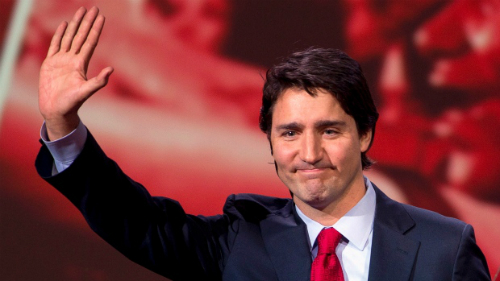
Welcome Prime Minister Trudeau! Canadian voters have decided he is ready to run this country!


Last week Canadians voted in a new federal government, led by Justin Trudeau, the son of former Prime Minister Pierre Elliot Trudeau. The fact that the CAD was down almost 2% on the week has more to do with the low inflation readings and soft oil prices than the rise in power of the traditional centrist Liberals. Canadians were able to cut through the negative ads by the ruling Conservatives portraying Trudeau as a good looking guy with “nice hair” that simply wasn’t ready to run a country. Trudeau made a point of pledging to run modest budget deficits for three years to kick-start the economy through investment in public transport, building affordable housing, and other infrastructure projects. Trudeau’s win may be a sign that the anti-austerity regime in Western governments is about to turn, especially since it’s becoming more and more obvious that central bank stimulus is running out of gas. All eyes will be on him and his government because if he can pull this off, it will be a road map for other governments to follow.

The US dollar index was on the cusp of breaking down from its recent ranges. However, it was not to be as a combination of rate cuts by the central bank of China and dovish jawboning by ECB President Mario Draghi help the USD bounce off support and surge higher to outperform the rest of the major currencies. The People’s Bank of China on Friday cut interest rates for a sixth time in a year after data last week showed that GDP grew 6.9% in the third quarter from a year earlier, the slowest pace in more than six years. China's central bank cut the benchmark rate by 25 bps on a one-year loan to 4.35%. The PBOC also increased the amount of money available for lending by reducing the level of reserves banks are required to hold. This was the latest signal of a major central bank's commitment to unusually low rates to try to spur economic growth.
Meanwhile on Thursday, ECB President Draghi sent his own strong signal that the bank is prepared to expand its stimulus program, which sent the euro down 2.96% on the week. Draghi outlined the options available: extend the end-date for QE purchases beyond the end of September 2016, increase the size of the QE program, broaden the types of bonds purchased, and/or lower the deposit beyond its current level of minus 0.2%. Like all global central banks, the ECB is worried about too-low inflation – inflation rates are barely above zero and far below the 2% rate that most consider optimal. Expectations are now set for more easing at its December policy meeting.

What War Hath Wrought

Currency wars are a zero-sum game. Who is eating whose lunch is an interesting question, but a more important query is whether the pie itself is growing. The ‘pie’ in this instance is essentially global GDP. Everyone would agree that the global economy moving forward is considerably diminished because the rate of global trade and integration is shrinking, which has been a key driver over the past 60 or so years. Growth has indeed slowed, but the only bump in the road we see in our rear-view mirror was the financial crisis of 2008/09. So, who is winning the currency war post-2009? Like we said above, currency wars are a zero-sum game, so nobody is winning. However, there has been a huge change in the currency landscape because earlier this month China’s yuan overtook Japan’s yen to become the fourth most used currency for global payments, brushing off a surprise devaluation in CNY to rise to its uppermost ranking ever and advancing its assertion for reserve status.

According to a report published in early October, the Society of World Interbank Financial Telecommunications (SWIFT), the proportion of international transactions denominated in yuan climbed to a record 2.79% in August compared to 2.34% in July. The icing on the cake for the CNY would be inclusion into the IMF’s twice-a-decade review of its Special Drawing Rights (SDR) basket, which is currently comprised of the USD, EUR, JPY and GBP. If the yuan does get included into the basket, it could mean as much as $1 trillion of inflows into the currency. Inclusion into the SDR would also likely promote more reform in China, and it is widely known that the People’s Bank of China Governor Zhou Xiaochuan is keen to liberalize the markets. Fingers crossed!

The only obstruction left to overcome to even loftier heights for the CNY is removing the barriers of foreign access to mainland China’s markets. According to Economists Tom Orlik and Fielding Chen of Bloomberg Intelligence:

The People’s Bank of China continues to come up with ingenious workarounds to promote yuan internationalization without capital-account opening. Rapid growth of the dim sum bond market means international investors don’t need to bring funds into China to buy yuan assets. Offshore yuan bond issuance rocketed to $270 billion in 2014, up 153 percent from $107 billion in 2013.

Swap agreements totaling 3.5 trillion yuan have now been signed between the PBOC and more than 30 other central banks. Currency swaps can be used by trade partners to cushion against a balance of payment crisis. As such, they reduce other central banks’ need for dollars and mean the yuan is already playing a role as a de facto reserve currency.

The start of Mutual Market Access between Shanghai and Hong Kong equity markets last year represented a step toward market opening. So far, its reception has been lukewarm, with more than 50 percent of the inbound quota and 70 percent of the outbound still unused.

The yuan’s astonishing progress into global markets validates President Xi Jinping’s determination to
test the supremacy of the dollar and a global economic order, which has been long dominated by Europe and the United States. China’s greatest incentive to pick up the pace of reform is to remove the hegemony of Western economies. The U.S. is very confident that it will never be dethroned has reprimanded China on and off for decades for keeping the yuan weak to boost exports, says it hasn’t done enough to dismantle controls. A more widely used currency would raise China’s influence in setting prices of commodities from oil to orange juice and give individuals and companies on the mainland more choice with what to do with their savings – not to mention her influence in global geopolitics. As the CNY makes its lengthy march to convertibility, China becomes susceptible to swings in the currency and money flows that could exacerbate its economic slowdown.


Wednesday, October 14, 2015

Ok CAD!


The CAD turned in another strong performance after leading the pack the previous week, however, caution is warranted after last Friday’s employment report. Like all currencies, the CAD has benefited from the US Fed’s dovish September hold. Another driver of the CAD’s advance has been the rebound in the economy. Back-to-back monthly GDP growth in June and July after five sequential months of negative or zero growth has help to cement expectations that the economy may have turned the corner and would not need any additional easing by the Bank of Canada. Of course, a discussion on the performance of the CAD would not be complete without any mention of the price of crude. Crude oil has managed to rally about 34% of its recent low in August and also managed to rise over the $50 level this past week before giving up some of its gains. Having said this, the way forward for Canada remains bumpy as evidenced by Friday’s jobs data. Canada added 12.1k jobs in the month of September, which was slightly better than expected. However, all of those gains were in part-time jobs since there was a loss of 61.9k full-time jobs, the largest amount since October 2011. That brings the loss in full-time jobs to 25K for Q3 alone. In addition, the unemployment rate rose to 7.1%, a 2-year high. This type of data warns that the rally in the CAD may sputter soon.

For the second consecutive week the USD has been the underperformer against the majors as the release of the FOMC minutes from the September meeting reinforced the dovish impression. The leaders of the pack, AUD and NZD, each managed to turn in a 4% increase on the week, powered by its own unique driver. The AUD surged higher after the Reserve Bank of Australia kept rates on hold as expected but it suggested that the bar was high for another rate cut this year. For the NZD, the story continued to be milk. Milk prices increased for the fourth auction in a row, fanning expectations that prices for New Zealand’s most important export have bottomed, which in turn takes the pressure off the Reserve Bank of New Zealand to ease again.

We had no less than six FOMC members speaking last week and even though all 6 members are considered doves, they all went out of their way to impress upon us that an interest rate hike is coming soon and that they really, really, really mean it this time. Oh really?! They’re not the only ones trying to sell us this line. Apparently 64% of the economists surveyed by the Wall Street Journal expect a hike in December. To be a little fair, some of these economists have wavered from their original position because back in August, 82% expected a hike in September. The survey also found that 23% expect the first hike will be delivered in March 2016; do we hear anyone for 2017? We wonder if any of these economists are also employed at the IMF because they just downgraded global growth to 3.1% this year from its previous forecast of 3.3%. By the way, it was the fourth time this year that they changed their forecast. Are you kidding me? Why do we even listen to these people? Apparently, we are not the only ones with this opinion. Joris Luyendijk of the Guardian wrote an eloquent piece on the science of economics, or rather the lack thereof, this weekend titled, “Don’t let the Nobel prize fool you, Economics is not a science.”

We have our doubts. We don’t see a hike at all this year or next, which falls in line with many forecasters and analysts. But hey… what do we know? We’re not going to let the fact that for the first time since 2009, all six major Fed regional activity surveys are in contraction territory. We’re also going to ignore the fact that 3-month bills sold at a yield of zero for the first time in history. That’s right, at last Monday’s Treasury auction investors decided to buy $21 billion in 3-month Treasury bills at a yield of zero. If that didn’t astonish you, demand was the strongest in over three months, as the bid-to-cover ratio, which is a widely used measure of demand, was the highest since late June, according to data from Jefferies. Don’t worry folks, interest rates can’t go much lower than zero, or can they?

The USD has been the worst performing currency since the Fed decided to leave interest rate on hold at its September policy meeting. This weakening in the USD combined with the global slowdown in growth and lower inflation due to lower commodity prices is starting to undermine the current quantitative easing (QE) programs of the ECB and the BOJ. What we mean by undermine is that the euro and yen are rising against the USD. This may cause these central banks along with other foreign central banks to ease policy even further causing the USD to rise again. If this transpires, then the Fed may have to respond in kind in order to keep the USD in check (The ECB and BOJ can’t have this, there is a currency war going on after all). Many of the bloggers in cyberspace that are calling for QE4 have it all wrong. The fact that we have had more than one QE program from the Fed only tells us that they have all failed. We think the Fed’s next move will be not a hike in rates or another QE program, but a cut in interest rates to negative. Don’t think it’s possible? Well, let’s consider that the Swiss national bank is at negative 0.75%, the ECB is at negative 0.20%, and Sweden and Denmark are also in negative territory. Also, remember the September dot plot, which showed that one FOMC member wanted negative rates at the end of 2015 and 2016. We’re guessing that was Minneapolis Fed chief Narayana Kocherlakota because in a speech last Thursday he made these following points that were summarized by Bloomberg:

 KOCHERLAKOTA SAYS FED SHOULD CONSIDER NEGATIVE RATES
 KOCHERLAKOTA: TAPERING ASSET PURCHASES LED TO SLOWER JOB GAINS
 KOCHERLAKOTA SAYS JOBS SLOWDOWN 'NOT SURPRISING' GIVEN POLICY
 KOCHERLAKOTA: TAPERING ASSET PURCHASES LED TO SLOWER JOB GAINS

We would be remised if we didn’t mention the China factor in all of this. China’s foreign exchange reserves fell another $43bn last month, suggesting continued intervention in the forex markets to support the renminbi. This was down from the $94bn they spent in August trying to shore up the renminbi after the August 11 devaluation. Should we expect the Chinese to continue to spend their reserves on stopping their currency from falling while their economy continues to sputter? Wouldn’t it help China’s economy if they allowed the currency to fall? We suspect that if the Chinese renminbi does fall it will force the Fed to react and that reaction may very well be in the form of negative interest rates.

Monday, September 21, 2015

The Big Tickle


All currencies rallied to the upside against the USD last week except for the euro after the Federal Reserve switched gears. The best performs were the commodity cousins, the aussie and kiwi, in the wake of the Fed’s indecision on an interest rate hike. The euro unwound its post-Fed rally the following day after European Central Bank policy makers noted risks to the global economy. Benoit Coeure, an ECB Executive Board member, said the Fed’s decision vindicates the ECB’s assessment of the uncertainties surrounding the global growth outlook while his colleague on the ECB board, Peter Praet, said in an interview with the NZZ newspaper that the ECB should be ready to act if economic shocks turn out to be long-lasting.

The big tickle for the week was the Fed’s policy shift. Most were probably not surprised that the Fed left rates unchanged at their FOMC meeting last week. That makes it 55 straight meetings without a change in interest rates. The surprise came in the Fed’s reasoning for its inaction – its concerns that developments in the global economy and markets could “restrain US economic activity somewhat”. This change emphasizes that global growth concerns are a real concern, which may cause a risk off environment to develop.

We guess we can call this move a “dovish hold”.


The Fed also released its dot plot plan after the meeting. The plot shows the projections of the 16 members of the Federal Open Market Committee (the rate-setting body within the Fed). Each dot represents a member’s view on where the fed funds rate should be at the end of the various calendar years shown. The latest plot reveals the number of policy makers who do not expect lift-off to happen in 2015 has risen from two to four. Thus, 13 of 17 Fed officials still expect a rate hike this year, which is down from 15 in the June plot. This is surprising considering the new wrinkle towards global growth uncertainty – if the Fed is now “officially” worried about the recent global growth uncertainty is it logical that two months of global data will be enough to alleviate that uncertainty so that they can raise interest rates at their December meeting?

There was yet another shocker in the dot plot. For the first time ever, one Fed policy maker is forecasting negative rates for this year and next (highlighted in red on the dot plot). During the post meeting press conference, Chair Yellen was asked about negative rates and she said that negative rates were not "something we seriously considered" at the current juncture. However, she didn't rule it out – “I don’t expect that we’re going to be in a path of providing additional accommodation. But if the outlook were to change in a way that most of my colleagues and I do not expect, and we found ourselves with a weak economy that needed additional stimulus, we would look at all of our available tools. And that would be something that we would evaluate in that kind of context.”

The implications from all of this are that other foreign central bankers may be forced into further action. With the Fed on hold, dovish central banks may want to ensure that the Fed’s inaction doesn't jeopardize their own domestic inflation targets – thereby setting off another round of monetary easing in the ongoing currency wars.

Why the Fed HAS to Consider the Global Economy

From CNBC found here.

Operating within an economic system where the foreign trade sector represents nearly one-third of demand and output, the Fed must carefully consider price and activity effects coming from the rest of the world. This year, for example, an estimated foreign trade deficit of more than $500 billion is expected to reduce America's economic growth by an entire percentage point. That is because the strong domestic demand – consisting of private consumption, residential investments, business capital outlays and public spending - is stimulating the purchases of foreign goods and services, while the weak economies in the rest of the world, and a strong dollar, are holding back American export sales.

External price effects on American inflation developments are equally strong and straightforward. Driven by a 13.3 percent decline in fuel costs, import prices in the year to August fell 11.4 percent. The non-fuel prices also declined 3 percent, marking their largest drop since October 2009. As a result of that, the headline index of consumer prices (CPI) rose only 0.2 percent in the twelve months to August. But, over the same period, price gains in sectors sheltered from international competition – approximated by the core CPI - edged up 1.8 percent, maintaining the rate of increase observed since the middle of last year.

That enormous difference between the headline and the core rates of inflation shows the strength of externally-induced effects on American costs and prices. And the U.S. inflation story does not end there. What was discussed so far are just the first-round external effects on the domestic price formation process. The second-round effects are arguably even stronger and more pervasive, because an open trading system and declining import prices exercise a vigorous restraint on the pricing power in a broad range of American industries. All this shows how America's foreign trade transactions directly impact the Fed's ability to fulfil its mandate of full employment and price stability.

Employment, in particular, is a difficult part of the mandate. Monetarists have often objected to that. They argue that the monetary policy can only provide an environment of price stability in which demand, output and employment creation can take place. But the mandate is still there, and employment is always a politically-charged issue. Consider, for example, the fact that the current labor market numbers are not as good as implied by the reported 5.1 percent unemployment rate.
Adding 6.5 million involuntary part-time workers (people working part-time because they cannot get a full-time job) and 1.8 million people who are marginally attached to the labor force (mainly people who quit looking for a job because they could not find one), gives an actual unemployment rate that is more than double the official 5.1 percent rate. That also means that the actual number of unemployed is 16.3 million, rather than the reported 8 million. The high numbers of America's long-term unemployed (people out of work for 27 months and over) are reflecting current labor market difficulties as well. These numbers have been increasing since last June to reach 2.2 million at the end of August, accounting for nearly one-third of the reported unemployment.

A similar note about America's soft labor markets is sounded by average hourly earnings; they were roughly unchanged over the three months to August. Now, let's bring back into discussion that 1 percentage point that our foreign trade deficit will knock off the growth of our domestic demand. Even the convinced free traders – of which I am one – have to admit that the immediate effect of that will be job losses in our import-competing industries. The long-term dynamic effects of free trade may well be positive for the world economy as a whole, but that is of little consolation to retrenched workers and bankrupt companies.

The Fed's critics, and American bankers threatening to begin laying people off if the Fed does not promptly oblige with higher interest rates, should understand that there is nothing the U.S. monetary authorities can do about Asians' unrelenting quest for export-led growth, and the European chaos of mean fiscal austerity policies and biblical refugee crises. There is also nothing the Fed can do about structural problems in U.S. labor markets. Only broad and active structural policies – e.g., better and more affordable education, labor force retraining and relocation – could make more people employable in an economy which, thanks to the Fed, is already pushing well above its physical limits to growth.

Foreign trade and labor market policies are the responsibilities of the federal government.
It is not up to the Fed to negotiate better market access to American companies in foreign countries, or to make sure through various G forums (G7, G20, etc.) and multilateral organizations, such as the IMF and the OECD, that economic policies are properly coordinated in order to ensure a fair and a more balanced international trade. And neither is it the Fed's fault that East Asia and the euro area are currently running trade surpluses of $700 billion and $320 billion, respectively, and acting as a huge drag on world economy – extracting that 1 percentage-point gift from the growth of the U.S. domestic demand.

The Fed just has to compose with all that, and to calibrate its policy in order to minimize the negative
effects on U.S. growth and employment of this extremely unbalanced situation in global trade flows. The sad part is that none of these vitally important issues for American economy and security are even mentioned, let alone debated, in the presidential primaries of either party – except for some rather folkloric utterances by Donald Trump, who keeps screaming "they are robbing us blind," and who would treat the Chinese president to a Big Mac instead of a glittering state dinner at the White House.

Somebody has to mind the store. It is easy to criticize the Fed for everything, especially if the Dow does not keep soaring. But the Fed's critics have to understand that economic growth, employment creation and a sound investment environment are a result of an entire policy mix - monetary, fiscal and structural (or regulatory) policies – that is supposed to guide an open economy toward an optimal utilization of its (physical) capital and labor resources.

Having missed the September deadline for the Fed's interest rate increase, the wise-guys are now taking what they call "a December liftoff" as an obvious certainty. Investors, as opposed to traders, should pay no attention to that. People confidently predicting a September rate hike have shown that they can't even read an open book that is called the Fed. The Fed will exercise its mandate as a function of events whose outcome is unknowable ex-ante. The Fed is watching these events like the rest of us. When the data begin signaling the desirability of a policy change, the Fed will adjust its instruments in a manner that will carefully prepare its next move.

So far, the Fed sees nothing that would warrant that kind of action.

Tuesday, July 7, 2015

Oximoron


Teetering Technical Recession

Canada may be teetering on the brink of a technical recession as business investment plunged in response to slumping crude-oil prices. Last Tuesday, Statistics Canada released the April GDP report and it showed that Canadian real GDP contracted for a fourth consecutive month, with real GDP down by 0.1% in the month. Market expectations were for a 0.1% increase in April. The data is raising concerns in the economy’s ability to post growth of 1.8% in the second quarter, which is what the Bank of Canada is expecting. This is raising speculation that the BOC could cut rates as soon as its next meeting on July 15th, which would weigh heavily on the CAD.

The BOC cut rates in January as an “insurance policy” for the economic fallout in the plunge in the price of crude oil. Crude oil was under pressure last week due to the increase in drilling rig counts and the possibility of a near term deal between Iran and the USA which would put more supply into the market. As you can see from the chart, the price of oil has stabilized over the last couple of months but it is in danger of slipping below its lowest level since mid-April. If it breaches that level the next support would be around the $52 level. The BOC will be watching the chart below very closely and may be tempted to take out another insurance policy by way of a rate cut.

The CAD fell through the green trend line on the daily chart on the negative GDP news of last week. The downside stalled near the mid-April low around the 0.79 level. However, increase speculation on another BOC rate cut and continued pressure on crude could put the mid-May low of 0.7780 in play. There is plenty of Canadian data this week - Ivey Purchasing Managers index, Business Outlook Survey, Building Permits, Housing Starts, and Friday’s employment data.

The Japanese yen finished at the top of the leader board last week as the yen did what it always does in a risk off environment – it races to the top as it benefits from safe haven flows. Interestingly, the commodity currencies of Australia, Canada, and New Zealand were the worst performers, and they all under-performed for the same reasons – risk off, lower prices of key commodities, and potential monetary policy moves. Greece and the Chinese stock market selloff have pushed safe haven flows to the yen and USD. The AUD was weighed down by declines in the price of copper and iron ore; the CAD suffered due to the down draft in the price of crude oil; and the NZD continued to suffer from the ongoing decline in milk as the GlobalDairy Trade index declined for the eighth consecutive week. The commodity price and economic backdrop for all three of these countries is putting pressure on their respective central bank to make some near term policy moves.


Over the weekend China demonstrated that it is very nervous about the 30% decline in its stock market since June 12. The week before the Chinese central bank lowered its key one-year lending and deposit rates and cut reserve requirements. These moves failed to arrest the fall in the stock market so on Friday more measures were announced by various group – 25 mutual funds companies stated that they would actively buy stocks and hold them for at least a year, 21 brokerage firms said they would invest 15% of their net assets (about $20 bln) in the ETFs of high capitalization stocks, and finally no new IPOs were being issued for the time being. These moves reek of desperation. The other big news over the weekend is that Greece voted “no” in their referendum. What this means precisely is unknown and it will probably play out over the following week, but we’ll go into further detail below.

Greece: The Unknown Abyss

In a previous blog post "More Cowbell?", we talked about possibly scenarios that might play out with a “no” vote. Well, we’re here, and frankly speaking, absolutely nobody knows what’s going to happen in the near- and long-term. However, everyone does agree that something must happen very quickly. Allianz’s Mohamed El-Erian offered a brief preview of what will happen next as a function of three main things:

 Whether Greece and its creditors can work together to reconcile what were two very different interpretations in the run-up to today as to what a “no” outcome means, and do so very quickly and effectively;

 Whether already horrid conditions on the ground, including the high likelihood of further delays in re-opening the banks and significant difficulties getting fresh money into ATMs, provide enough time for the politicians to get their act together; and

 Whether the ECB rolls out new measures to contain contagion.

The fallout from the “no” vote has already begun as the embattled Greek Finance Minister, Yanis Varoufakis resigned. In a blog post, Varoufakis stated, “"I was made aware of a certain preference by some Eurogroup participants, and assorted 'partners', for my ... 'absence' from its meetings; an idea that the Prime Minister judged to be potentially helpful to him in reaching an agreement. For this reason, I am leaving the Ministry of Finance today." He continued, "I shall wear the creditors' loathing with pride."

Speaking of creditors, no discussion on Greek debt is complete without identifying who is owed. Currently, Greece’s public debt stands at €323 billion, which is nearly 175% of the country’s GDP. You don’t need us to tell you that this is completely unsustainable.

There are simply too many unknowns to get into a deep analysis of what might happen in the coming days and months. As we said earlier, the process must start very quickly and openly so that the markets find some stability. In addition, the last thing we want to do is misguide you as you make decisions on your personal or corporate exposure to FX, particularly the EUR. That said, we love an informed customer, so please call us at 604-685-1016, or email us at info@vbce.ca. We would be more than happy to give you up-to-the-minute information on what’s going on in the markets.

The FX Roundup

We did not see this coming. I’m not referring to the “ohi” (otherwise known as “no”) vote delivered by the Greek people (for you students of Modern Greek “ohi” is pronounced “o-hee” with a guttural “hee”). I am referring to the mandate delivered; a clear margin of victory for those rejecting the proposed austerity measures. While the market waxes and wanes some minor details need to be worked out, such as “Is the referendum binding?”, and “If so, how?” Maybe this whole matter needs to be kicked upstairs. As Axel Schaefer, a deputy head of the Social Democrats in Germany suggested: “EU leaders must get together immediately, even on Monday. The situation is too serious to leave to finance ministers”. This quote is so funny on so many levels we don’t even know where to start. We will say that we're calmed by the fact that it appears that someone important in Europe will be taking a look at this problem in the next 24 hours.


We will be bombarded with lots of news and commentary from all corners of Europe over the next few days so we think it’s better to keep our own powder dry with respect to addressing where we go from here. Greek Prime Minister Alexis Tsipras tweeted out “Today's referendum doesn't have winners or losers. It is a great victory, in and of itself…. The mandate you've given me does not call for a break with Europe, but rather gives me greater negotiating strength.” We will see about that in 6 months if after rejecting the bailout terms Greece teeters on the brink of total collapse before capitulating to something far more draconian than the deal on the table today.


Tuesday, June 30, 2015

Ο ανήφορος φέρνει κατήφορο


With his back to the wall, the Prime Minister of Greece, Alexis Tsipras, did what every politician in his position would do – he made a political move by calling for a snap referendum to be held on July 5. The question to be put before voters is whether or not the country is willing to submit to the conditions being demanded by the International Monetary Fund, European Union and European Central Bank. This may be a moot point because the IMF is owed a payment on June 30th; this will not be made and opposition leaders may call for a no-confidence vote. If successful, it would cause a new government to be formed or the dissolution of the government and new elections. As you can see there are still many unknowns at play here.

What we do know is that the Greek banks have no more money, so a bank holiday and capital controls was implemented yesterday (Monday, June 29th). For the rest of the Eurozone, we are sure that the key leaders of each country will have that Boomtown Rats song playing in the back of their heads – “I Don’t Like Mondays.” We can see headline already – “Black Monday”, “Lehman Weekend”, “Opa Oops”. As we write this commentary, trading has opened and the Euro has gapped down.

Lest we forgot, the other big news was that on Friday out of China. China’s central bank cut reserve requirements up to 50 bps and cut the benchmark one-year deposit and lending rates by 25 bps. Strap on your seat belts because this is going to be humdinger of a week!
What are the Capital Controls in Greece?

During the summer months, Greece isn’t typically known for high-stakes drama, but in the last few days, negotiations between Greece and its European paymasters indicate that the country’s economic crisis is approaching a breaking point. Briefly summing up the banking crisis, deposits fell to an 11-year low in May and have lost nearly 15% of their value since November. Stoking the flames is the fact that wealthy Greeks pulled their money out of Greek banks as soon as the Leftist Syriza government came to power in January with the promise to end austerity. With tomorrow’s bail-out expiry looming, more and more ordinary citizens have started queueing up at ATM’s to pull out their savings in fear of a full-blown banking collapse.
The Greek government implemented a number of measures in the early hours of Monday to keep money in the financial system. Here is a summary of the capital controls that were implemented to protect the financial system:

 From Monday, June 29, 2015, banks will remain closed up to and including Monday, July 6;

 Deposits are fully safeguarded;

 The payment of pensions is exempted from the restrictions on banking transactions. Management of credit institutions will announce how these will be paid;

 Electronic transactions within the country won’t be affected. All transactions with credit or debit cards and other electronic forms (web banking, phone banking) can be conducted as normal;

 Prepaid cards may be used to the limit existing before the beginning of the bank holiday;

 From midday June 29, ATMs will operate with a daily cash withdrawal limit of 60 euros per card, which is equivalent to 1,800 euros a month;

 Foreign tourists can make cash withdrawals from ATMs with their cards without restrictions provided these have been issued abroad; and

 A special Committee to Approve Bank Transactions has been established at the State General Accounting Office in cooperation with the Finance Ministry, the Bank of Greece, the Union of Greek Banks and the Capital Markets Commission. This committee will deal with applications for urgent and imperative payments that can’t be satisfied through the cash withdrawal limits or by electronic transactions (e.g. payments abroad for health reasons). Wages paid electronically to bank accounts aren’t affected.

The question becomes, will the capital controls affect the outcome of the referendum? It’s hard to dissect the psyche of the average Greek citizen at the moment. Waking up in the morning to find out that you can only take out 60 Euros per day will certainly have a big impact. But if the Greeks think that the Europeans are cutting them off, it could push them to vote “No” and reject the bail-out deal. On the flipside, the prospect of life under capital controls could scare many into voting “Yes” out of fear of things to come should they leave the Euro.
Hold on to your hats – HUGE week ahead!

Oh yes, before we sign off, you may be wondering about the title of this piece, Ο ανήφορος φέρνει κατήφορο, which in Greek means the uphill is followed by a downhill. It’s the equivalent of what goes up, must come down.

Wednesday, June 24, 2015

More Cowbell?


Surprisingly, the biggest story of the week wasn’t Greece but the USD and the Fed. Federal Reserve Chairwoman Janet Yellen emerged from a two day policy meeting to declare that the FED NEEDS “MORE DECISIVE EVIDENCE”. More cowbell? Are you kidding?! It seems that every time the market’s perception gets closer to thinking the Fed is about ready to finally raise interest rates the Fed pulls the rug out from underneath that train of thought. After more than 6 years of emergency monetary policy, which included QE1, QE2, QElite, QE3 – all under a zero interest rate policy – what is it that the Fed is fearing?

The USD took it on the chin (more on this later) as it appears the market has lost complete faith in the Fed. For example, let’s take a look at the Fed’s revised growth rate for 2015. It downgraded 2015 GDP to 1.8-2.0% from 2.3-2.7%, which had already been downgraded in March. Doing the math, Q1 came in at 0.7% and the Atlanta Fed GDP Now model has Q2 at 1.9%. Thus, to get to 2.7% for the year means that both Q3 and Q4 must come in at 4%. This may be a tall order, but if it happens then we should expect the Fed to raise interest rates.

Now for the USD, the reaction after the Fed announcement was swift and fast. The US dollar index is not on firm ground on the charts. The 50-day moving average has crossed the 100-day moving average, which is known as a death cross in technical analysis. As you can guess from the name this is not a positive development, as it indicates a bear market is on the horizon. The momentum indicators are also flagging.

On the fundamental side, the America’s trading partners are heading in the opposite direction. Japan has signaled that it no longer wants a weaker yen. The UK looks to have regained its legs after the Scottish referendum, the federal election, and a central bank that appears comfortable in raising interest rates in mid-2016. Europe looks like it has escaped deflation and is slowly on track for positive growth despite its problems with Greece. As for China, it is starting to exhibit some green shoots – just last week China’s business indicator reached its highest reading in a year at 53.5 from the 49.7 it registered in May.

Salvation to Catastrophe: What might happen to Greece


We found this excellent article on Bloomberg, which we thought is worth a read. You can find the Original article here

The Greek saga has haunted policy makers for more than five years. Now talks are deadlocked, banks are on life support and time is running out. With financial doomsday drawing ever closer in Athens, everyone from creditors and investors to depositors is increasingly focusing on what's next.
Some things are clear:

 Greece owes the International Monetary Fund about $1.7 billion this month.

 In July and August, the European Central Bank is due almost 6.8 billion euros ($7.6 billion).

 The euro-area backed bailout program expires on June 30, with creditors refusing to release up to 7.2 billion euros in remaining funds before Athens complies with belt-tightening conditions.

With time running out to close a deal, the German government has begun planning for a Greek default, according to Bild newspaper. If you're waiting for a clear resolution to the country's status in the 19-nation monetary union, you may wait a long time. Adopting the euro was always supposed to be a one-way ticket, so there is no legal precedent or political roadmap for an exit.
Next steps for Greece range from retaining the euro to catastrophic divorce. Half-measures are also on the cards, such as having multiple currencies circulate, with aid recycled to repay foreign-currency debts. Equally unclear is who would tell the world - and how - that Greece has entered an economic afterlife. Possible messengers include Greek Prime Minister Alexis Tsipras, European Central Bank President Mario Draghi, European Union President Donald Tusk and European Commission President Jean-Claude Juncker. There could be others.
We asked economists, investors and former policy makers what could happen next – and how it might unfold.

Scenario A – Grexit Avoided

Tsipras, whose Syriza party won January elections promising to undo the tough terms of the bailout loans, capitulates to creditor demands. Faced with a choice between effective expulsion from the euro area or implementing austerity in exchange for loans, Tsipras takes the cash. The ECB maintains its support of the financial system.
While aid flows, the government's days are numbered as its most hardline supporters mutiny. A new coalition is formed with backing from the pro-European opposition and Syriza's moderate flank – or elections are called. Greece's continued euro membership is ultimately secured as new loans are used to repay the ECB and the IMF and the country's coffers are replenished. Greece gets easier repayment terms on bailout loans. This helps tame the popular backlash against the new wave of fiscal measures. However, the cuts attached to the agreement suppress economic output, delaying Greece's recovery from the longest recession on record.

Scenario B – Hotel California

Greek Finance Minister Yanis Varoufakis has described euro membership by using a lyric from the famous 1976 Eagles song: “You can check out any time you like, but you can never leave.” Tsipras might fail to strike a compromise acceptable to the German government, Communist factions of his Syriza party, and stakeholders in between. Somehow, though, he manages to keep Greece officially in the euro.
Bailout loans – Greece's only source of funding – remain stalled. With Europe's political leaders unwilling to proceed, the ECB rations Emergency Liquidity Assistance, the lifeline keeping Greek banks afloat.
That requires the imposition of capital controls – as there isn't enough cash to meet demand – following a bank holiday. We're calling the two possible outcomes from here “somersault” and “check out.”
Scenario B1 – Somersault
Capital controls mean that limits are placed on withdrawals and transfers. The dramatic consequences force Tsipras to compromise. Opinion polls show that most Greeks – between two-thirds and three-quarters of the population – want to stay in the euro area “at any cost”. “You can check out any time you like, but you can never leave.”
Tsipras forges a new coalition with opposition lawmakers of pro-European parties. A referendum carried out amid capital controls and with banks shut, gives him a mandate to reverse course. A unity government is formed and Greece remains in the euro, but not before the disruption triggers a new recession.

Scenario B2 – Checking Out

With banks shut, the political situation deteriorates and a popular uprising intensifies, with Germany targeted as the country's main antagonist. Polls show a swing in favor of breaking from the euro area.
Capital controls give the government the space and time to print either a new currency or IOUs for domestic payments. The new scrip quickly plunges, reflecting the weak fundamentals of an economy that has shrunk by about a quarter since 2008.

Euro-area governments give Greece a “sweetener,” a parting-loan in hard currency. The rationale is to avert total economic collapse, which would create a failed state in a strategically critical region.
Greece’s debt to public entities is restructured, providing for the repayment of loans to the IMF, either through the euro area’s crisis fund or from the departure credit. Greece remains shut out of debt markets. Most Greek companies and banks default. Some bank deposits are seized to recapitalize a shattered financial system, or redenominated to the new legal tender equivalent. The sovereign debt
restructuring of 2012 has already ensured that the state won’t have to pay principal on most of itsexisting loans to private investors and the euro area for the next few years and until the economy stabilizes. Both the new paper and euros circulate. Greece may not officially leave the euro zone – the door is open to a return in good standing – though the country sputters in a financial purgatory.

Scenario C – ‘C’ for Catastrophe

Greece separates from the euro area in a messy default, amid demonstrations and deepening misery for most, with the government blaming everything on the Germans. No help is provided to support a new currency and to keep servicing bonds and IMF debt. That triggers cross-default clauses to all creditors. The government and banks collapse, meaning that years will be needed before a new structure emerges. Greece's economy plunges into a second depression. The blow from the biggest default in the history of capitalism drives Europe back into a recession and heaps pressure on vulnerable euro countries such as Italy.

Bad blood leads to Greece’s departure from the European Union. The idea that the euro is irreversible is thrown into question, rattling global markets. The economic implosion paves the way for extremists, from either the left or the far right, to take power. Those who can, flee the country. The tumult casts doubt on Greek membership in NATO. A new – and unstable – government turns to Russia for support, providing a Mediterranean outpost for Vladimir Putin.


Wednesday, June 17, 2015

Water Cooler Talk


The GBP snapped a three week losing streak on its way to the top of the leader board. Not even a ratings downgrade from stable to negative in the UK’s credit rating by Standard & Poor's over the UK’s plans for an EU referendum was able to put a dent in sterling’s performance. The loser for the week was the NZD as it was crushed by the central bank’s 25 bp interest rate cut and its dovish insistence that further easing may be needed if future economic data is weak.

On to a topic we’ve discussed on and off over the past 12 months, currency wars. We know that there are people who doubt that a currency war is underway, but it appears that there are two types of currency wars going on right now based on media reports. First, last week began with comments about the USD being too strong that were attributed to President Obama by an unnamed French official. The comments were later denied by the President. Two days later, Bank of Japan Governor Haruhiko Kuroda suggested that the yen was unlikely to fall further on a real effective exchange rate basis because it was already "very weak". Yes we know that the purpose of the currency war is to weaken your currency in order to steal export market share from other countries and with this in mind, Kuroda’s.
comments were bullish for the yen, not bearish. Let’s keep in mind that he can afford to say this considering that the yen has moved from the 78 level to the 126 level in about 2.5 years, which works out to be about a 60% decline in the yen versus the USD. Two days later it was German Chancellor Merkel’s turn. She suggested that too strong of a euro would impede reforms in Spain and Ireland. Yup, no currency war going on here. Move along!

Second, the other currency war underway is the move away from U.S. hegemony (USD as a reserve currency). This can be seen by the setting up of parallel institutions like the IMF and World Bank led by China (BRICS Bank and Asian Infrastructure Investment Bank), and the accumulation of gold reserves by China and other central banks; and gold repatriation by certain western governments to bring home their gold stored outside their home country in places like New York and London.

These are interesting times indeed. Next week, keep an eye on the FOMC meeting, Greece, Deutsche Bank, and the Ukraine.

Greece Edges Closer to Default


Original article Found Here

The latest attempt to end the deadlock between Greek and EU officials in Brussels failed on Sunday. The negotiations centered on whether Greece would meet the EU's demands to make spending cuts worth €2bn (£1.44bn) in order to secure a deal that will unlock vital bailout funds. "European Commission President Jean-Claude Juncker made a last attempt this weekend to find, via personal representatives and in close liaison with Commission, ECB and IMF experts, a solution with Prime Minister Alexis Tsipras that would allow for a positive assessment in time for the Eurogroup on Thursday 18 June," the Commission said.

"While some progress was made, the talks did not succeed as there remains a significant gap between the plans of the Greek authorities and the joint requirements of Commission, ECB and IMF in the order of 0.5-1 percentage points of GDP, or the equivalent of up to 2 billion of permanent fiscal measures on an annual basis." The Commission said that Greece's proposals were "incomplete", which made negotiation difficult. The talks fell apart after just 45 minutes.

The failure to reach a deal on Sunday leaves a final decision on a possible default to Eurozone finance ministers. This meeting will take place on Thursday, the European Commission said, and will be a last chance saloon for Greece if it wants to avoid a default. A Commission spokesman said: "President Juncker remains convinced that with stronger reform efforts on the Greek side and political will on all sides, a solution can still be found before the end of the month."
 
 
The IMF's chief economist Olivier Blanchard wrote in his blog on Sunday that, "Greek citizens, through a democratic process, have indicated that there were some reforms they do not want. We believe that

these reforms are needed, and that, absent these reforms, Greece will not be able to sustain steady growth, and the burden of debt will become even higher." Pensions remain a sticking point for Greece, with Athens refusing to give in to further cuts. "These are tough choices, and tough commitments to be made on both sides," said Mr Blanchard.


Below are the key hurdles Greece faces in the coming weeks:

June 15: European Central Bank president Mario Draghi to give quarterly testimony at European Parliament; Greece likely to figure.

June 16: Austrian Chancellor Werner Faymann visits Athens

Greek PM Alexis Tsipras scheduled to fly to Russia - expected to meet Russian President Vladimir Putin at St. Petersburg International Economic Forum, June 18-20.

June 17: Governing Council of the ECB non-monetary policy meeting in Frankfurt

Greece to sell 1 billion euros of 3-month T-bills.

June 18: Eurogroup meeting in Luxembourg

European Council President Donald Tusk has signaled this might be the day when the currency bloc decides Greek "game is over". General Council meeting of the ECB in Frankfurt.

June 19: EU finance ministers meeting. Greece needs to refinance 1.6 billion euros in T-bills. Greece needs to service about 85 million euros in interest on bonds held by the ECB.

June 25-26: European Union leaders Summit in Brussels.

June 30: Greece’s euro-area-backed bailout extension expires

Total payments of more than 1.5 billion euros to the IMF come due, after decision to bundle tranches due earlier in June

July: About 1 billion euros in interest payments due

Bulk of amortization and interest payments due on July 18-20 on bonds held by the ECB

July 1: Governing Council of the ECB non-monetary policy meeting in Frankfurt

July 8: Greece to sell 26-week bills

July 10: Greece needs to refinance 2 billion euros in T-bills

July 13: IMF loans repayment totaling about 450 million euros due. Eurogroup meeting

July 14: Greece needs to repay 11.67 billion Japanese yen (about $93 million) in yen loans

July 16: Governing Council monetary policy meeting of the ECB in Frankfurt

July 17: Greece needs to pay about 71 million euros in interest on the 3-yr bond it sold in 2014

Greece needs to refinance 1 billion euros in T-bills

July 20: Greece needs to repay about 3.5 billion euros in bond redemptions; bonds held by the ECB

July 31: Moody’s due to review Greece’s sovereign debt

August: 600 million euros in interest payments

Includes an 80 million euro payment to the European Financial Stability Facility

August 1: Interest on IMF loans totaling about 175 million euros; payment due by August 5

August 5: Governing Council of the ECB non-monetary policy meeting in Frankfurt. Greece to sell 26-week bills

August 7: Greece needs to refinance 1 billion euros in T-bills

August 14: Greece needs to refinance 1.4 billion euros in T-bills

August 20: Greece needs to repay about 3.2 billion euros in bond redemptions; bonds held by the ECB


Dinosaurs!

This has nothing to do with FX or the economy in general, but it’s information that we think will make you feel like Cliff Clavin (if that’s your life aspiration) and the most popular person in your office today.

Jurassic World just had a massive opening weekend where box office receipts topped $511 million worldwide. In case you’re having a little trouble grasping this number, let’s put it into perspective.
According to World Bank figures from 2013, Jurassic World’s total revenue from June 12 to 14 is greater than the annual GDP of the following countries:

1. Tonga — $466.3 million

2. Federated States of Micronesia — $316.2 million

3. Sao Tome and Principe — $310.7 million

4. Palau — $247 million

5. Marshall Islands — $190.9 million

6. Kiribati — $168.95 million

7. Tuvalu — $38.3 million