Tuesday, October 27, 2015

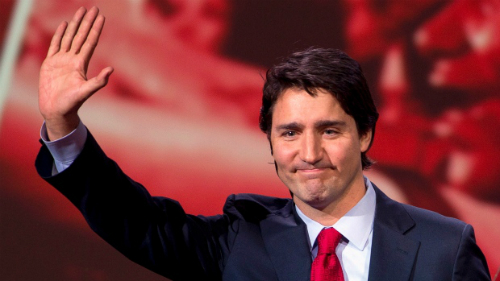
Welcome Prime Minister Trudeau! Canadian voters have decided he is ready to run this country!


Last week Canadians voted in a new federal government, led by Justin Trudeau, the son of former Prime Minister Pierre Elliot Trudeau. The fact that the CAD was down almost 2% on the week has more to do with the low inflation readings and soft oil prices than the rise in power of the traditional centrist Liberals. Canadians were able to cut through the negative ads by the ruling Conservatives portraying Trudeau as a good looking guy with “nice hair” that simply wasn’t ready to run a country. Trudeau made a point of pledging to run modest budget deficits for three years to kick-start the economy through investment in public transport, building affordable housing, and other infrastructure projects. Trudeau’s win may be a sign that the anti-austerity regime in Western governments is about to turn, especially since it’s becoming more and more obvious that central bank stimulus is running out of gas. All eyes will be on him and his government because if he can pull this off, it will be a road map for other governments to follow.

The US dollar index was on the cusp of breaking down from its recent ranges. However, it was not to be as a combination of rate cuts by the central bank of China and dovish jawboning by ECB President Mario Draghi help the USD bounce off support and surge higher to outperform the rest of the major currencies. The People’s Bank of China on Friday cut interest rates for a sixth time in a year after data last week showed that GDP grew 6.9% in the third quarter from a year earlier, the slowest pace in more than six years. China's central bank cut the benchmark rate by 25 bps on a one-year loan to 4.35%. The PBOC also increased the amount of money available for lending by reducing the level of reserves banks are required to hold. This was the latest signal of a major central bank's commitment to unusually low rates to try to spur economic growth.
Meanwhile on Thursday, ECB President Draghi sent his own strong signal that the bank is prepared to expand its stimulus program, which sent the euro down 2.96% on the week. Draghi outlined the options available: extend the end-date for QE purchases beyond the end of September 2016, increase the size of the QE program, broaden the types of bonds purchased, and/or lower the deposit beyond its current level of minus 0.2%. Like all global central banks, the ECB is worried about too-low inflation – inflation rates are barely above zero and far below the 2% rate that most consider optimal. Expectations are now set for more easing at its December policy meeting.

What War Hath Wrought

Currency wars are a zero-sum game. Who is eating whose lunch is an interesting question, but a more important query is whether the pie itself is growing. The ‘pie’ in this instance is essentially global GDP. Everyone would agree that the global economy moving forward is considerably diminished because the rate of global trade and integration is shrinking, which has been a key driver over the past 60 or so years. Growth has indeed slowed, but the only bump in the road we see in our rear-view mirror was the financial crisis of 2008/09. So, who is winning the currency war post-2009? Like we said above, currency wars are a zero-sum game, so nobody is winning. However, there has been a huge change in the currency landscape because earlier this month China’s yuan overtook Japan’s yen to become the fourth most used currency for global payments, brushing off a surprise devaluation in CNY to rise to its uppermost ranking ever and advancing its assertion for reserve status.

According to a report published in early October, the Society of World Interbank Financial Telecommunications (SWIFT), the proportion of international transactions denominated in yuan climbed to a record 2.79% in August compared to 2.34% in July. The icing on the cake for the CNY would be inclusion into the IMF’s twice-a-decade review of its Special Drawing Rights (SDR) basket, which is currently comprised of the USD, EUR, JPY and GBP. If the yuan does get included into the basket, it could mean as much as $1 trillion of inflows into the currency. Inclusion into the SDR would also likely promote more reform in China, and it is widely known that the People’s Bank of China Governor Zhou Xiaochuan is keen to liberalize the markets. Fingers crossed!

The only obstruction left to overcome to even loftier heights for the CNY is removing the barriers of foreign access to mainland China’s markets. According to Economists Tom Orlik and Fielding Chen of Bloomberg Intelligence:

The People’s Bank of China continues to come up with ingenious workarounds to promote yuan internationalization without capital-account opening. Rapid growth of the dim sum bond market means international investors don’t need to bring funds into China to buy yuan assets. Offshore yuan bond issuance rocketed to $270 billion in 2014, up 153 percent from $107 billion in 2013.

Swap agreements totaling 3.5 trillion yuan have now been signed between the PBOC and more than 30 other central banks. Currency swaps can be used by trade partners to cushion against a balance of payment crisis. As such, they reduce other central banks’ need for dollars and mean the yuan is already playing a role as a de facto reserve currency.

The start of Mutual Market Access between Shanghai and Hong Kong equity markets last year represented a step toward market opening. So far, its reception has been lukewarm, with more than 50 percent of the inbound quota and 70 percent of the outbound still unused.

The yuan’s astonishing progress into global markets validates President Xi Jinping’s determination to
test the supremacy of the dollar and a global economic order, which has been long dominated by Europe and the United States. China’s greatest incentive to pick up the pace of reform is to remove the hegemony of Western economies. The U.S. is very confident that it will never be dethroned has reprimanded China on and off for decades for keeping the yuan weak to boost exports, says it hasn’t done enough to dismantle controls. A more widely used currency would raise China’s influence in setting prices of commodities from oil to orange juice and give individuals and companies on the mainland more choice with what to do with their savings – not to mention her influence in global geopolitics. As the CNY makes its lengthy march to convertibility, China becomes susceptible to swings in the currency and money flows that could exacerbate its economic slowdown.


Wednesday, October 14, 2015

Ok CAD!


The CAD turned in another strong performance after leading the pack the previous week, however, caution is warranted after last Friday’s employment report. Like all currencies, the CAD has benefited from the US Fed’s dovish September hold. Another driver of the CAD’s advance has been the rebound in the economy. Back-to-back monthly GDP growth in June and July after five sequential months of negative or zero growth has help to cement expectations that the economy may have turned the corner and would not need any additional easing by the Bank of Canada. Of course, a discussion on the performance of the CAD would not be complete without any mention of the price of crude. Crude oil has managed to rally about 34% of its recent low in August and also managed to rise over the $50 level this past week before giving up some of its gains. Having said this, the way forward for Canada remains bumpy as evidenced by Friday’s jobs data. Canada added 12.1k jobs in the month of September, which was slightly better than expected. However, all of those gains were in part-time jobs since there was a loss of 61.9k full-time jobs, the largest amount since October 2011. That brings the loss in full-time jobs to 25K for Q3 alone. In addition, the unemployment rate rose to 7.1%, a 2-year high. This type of data warns that the rally in the CAD may sputter soon.

For the second consecutive week the USD has been the underperformer against the majors as the release of the FOMC minutes from the September meeting reinforced the dovish impression. The leaders of the pack, AUD and NZD, each managed to turn in a 4% increase on the week, powered by its own unique driver. The AUD surged higher after the Reserve Bank of Australia kept rates on hold as expected but it suggested that the bar was high for another rate cut this year. For the NZD, the story continued to be milk. Milk prices increased for the fourth auction in a row, fanning expectations that prices for New Zealand’s most important export have bottomed, which in turn takes the pressure off the Reserve Bank of New Zealand to ease again.

We had no less than six FOMC members speaking last week and even though all 6 members are considered doves, they all went out of their way to impress upon us that an interest rate hike is coming soon and that they really, really, really mean it this time. Oh really?! They’re not the only ones trying to sell us this line. Apparently 64% of the economists surveyed by the Wall Street Journal expect a hike in December. To be a little fair, some of these economists have wavered from their original position because back in August, 82% expected a hike in September. The survey also found that 23% expect the first hike will be delivered in March 2016; do we hear anyone for 2017? We wonder if any of these economists are also employed at the IMF because they just downgraded global growth to 3.1% this year from its previous forecast of 3.3%. By the way, it was the fourth time this year that they changed their forecast. Are you kidding me? Why do we even listen to these people? Apparently, we are not the only ones with this opinion. Joris Luyendijk of the Guardian wrote an eloquent piece on the science of economics, or rather the lack thereof, this weekend titled, “Don’t let the Nobel prize fool you, Economics is not a science.”

We have our doubts. We don’t see a hike at all this year or next, which falls in line with many forecasters and analysts. But hey… what do we know? We’re not going to let the fact that for the first time since 2009, all six major Fed regional activity surveys are in contraction territory. We’re also going to ignore the fact that 3-month bills sold at a yield of zero for the first time in history. That’s right, at last Monday’s Treasury auction investors decided to buy $21 billion in 3-month Treasury bills at a yield of zero. If that didn’t astonish you, demand was the strongest in over three months, as the bid-to-cover ratio, which is a widely used measure of demand, was the highest since late June, according to data from Jefferies. Don’t worry folks, interest rates can’t go much lower than zero, or can they?

The USD has been the worst performing currency since the Fed decided to leave interest rate on hold at its September policy meeting. This weakening in the USD combined with the global slowdown in growth and lower inflation due to lower commodity prices is starting to undermine the current quantitative easing (QE) programs of the ECB and the BOJ. What we mean by undermine is that the euro and yen are rising against the USD. This may cause these central banks along with other foreign central banks to ease policy even further causing the USD to rise again. If this transpires, then the Fed may have to respond in kind in order to keep the USD in check (The ECB and BOJ can’t have this, there is a currency war going on after all). Many of the bloggers in cyberspace that are calling for QE4 have it all wrong. The fact that we have had more than one QE program from the Fed only tells us that they have all failed. We think the Fed’s next move will be not a hike in rates or another QE program, but a cut in interest rates to negative. Don’t think it’s possible? Well, let’s consider that the Swiss national bank is at negative 0.75%, the ECB is at negative 0.20%, and Sweden and Denmark are also in negative territory. Also, remember the September dot plot, which showed that one FOMC member wanted negative rates at the end of 2015 and 2016. We’re guessing that was Minneapolis Fed chief Narayana Kocherlakota because in a speech last Thursday he made these following points that were summarized by Bloomberg:

 KOCHERLAKOTA SAYS FED SHOULD CONSIDER NEGATIVE RATES
 KOCHERLAKOTA: TAPERING ASSET PURCHASES LED TO SLOWER JOB GAINS
 KOCHERLAKOTA SAYS JOBS SLOWDOWN 'NOT SURPRISING' GIVEN POLICY
 KOCHERLAKOTA: TAPERING ASSET PURCHASES LED TO SLOWER JOB GAINS

We would be remised if we didn’t mention the China factor in all of this. China’s foreign exchange reserves fell another $43bn last month, suggesting continued intervention in the forex markets to support the renminbi. This was down from the $94bn they spent in August trying to shore up the renminbi after the August 11 devaluation. Should we expect the Chinese to continue to spend their reserves on stopping their currency from falling while their economy continues to sputter? Wouldn’t it help China’s economy if they allowed the currency to fall? We suspect that if the Chinese renminbi does fall it will force the Fed to react and that reaction may very well be in the form of negative interest rates.

Wednesday, October 7, 2015

Meet Your CSR: Q&A with David T.


You might recognize David from VBCE. Perhaps you've had the pleasure of having him serve you right before you took off for one of your eagerly anticipated vacations. Or maybe he provided you advice on how to help you save more money for your business. What you may not know are all the tiny details of what makes David so special to all of his co-workers here at VBCE.  In this month's post of 'Meet Your CSR' we asked David a few questions to help you get to know him better!

Tell us a little bit about yourself


I'm a senior CSR here at VBCE and been with the company for 7 years.  I have a wife whom I've been with for 5 years and we have a lovely daughter which is a year and a half years old. 

What thoughts come to mind when you tell people you work at VBCE?

I enjoy telling people that I work at VBCE especially when I hear that they are going on a vacation.  I tell them to come in and purchase FX from us because we have the best rates in town!

What is your dream destination for a vacation?

Bora Bora

Favorite song you would listen to on your dream vacation?

Run Away With Me - Carly Rae Jepsen


If you could take one person on a dream vacation with you, who would it be?

My Wife

Tell us about a stand out customer that you have previously helped out

I had a customer who was selling a couple of 100 oz Silver bars to purchase an old Mongolian ring.  He said it was owned by Kubla Khan and he would bring it in and show me once he got it.  So a few weeks past by and he kept his promise and came all the way downtown just to show me the Kubla Khan ring that he had just bought.  I was pretty fascinated with everything he told me about the ring.  He mentioned that its had a 3 dimensional drawing with a story behind the ring which I found very interesting.  I also showed the ring to my fellow Mongolian co-worker who was very impressed!

Give us a forex tip every savvy customer should know

I would suggest customers to do some research before they head on their trip so they know who much currency to bring on their trip. Example: How much is the average breakfast, lunch and dinner? Budget to spend per day? How much is cab/bus/train fare?

What is your favorite piece of bullion that you have ever come across?

My favorite bullion that I've came across is this year of the Dragon Lunar silver coin.


Monday, October 5, 2015

Water on Mars


The Canadian Dollar was the best performer last week relative to the greenback despite only a moderately positive GDP month-over-month. The real reason for the appearance of loonie strength is the fact that you can’t have a winner without a loser, and last week the greenback and Pound Sterling took the booby prizes.

The recent surge of GBP sell-off is likely being driven by the widening gap between the expected timing of the Fed rate hike and BoE’s rate hike, rather than the gradual deterioration of the UK’s economic outlook.

Noteworthy events this week include the annual Conservative Party conference which may hint at a potential date for their EU referendum. For those of you that don’t know, the UK is set to have a referendum by the end of 2017 on whether or not to remain a member of the European Union. Generally, big businesses are showing support to remain in the EU because it makes it easier for them to move products, people and money around the world. Others disagree, suggesting that an EU exit would allow the UK to negotiate trade deals as one country and not just one of 28. The British Chambers of Commerce indicated that 55% of members are backing staying in a reformed EU.

Last week, virtually any data that could suggest a growing U.S. economy was negative, including non-farm employment which came in at a disappointing 142K in contrast to the forecast of 201,000. The unemployment rate came in at 5.1% - unchanged and, hourly earnings were no good at 0.0% month-over-month. Finally, the labour force participation rate dipped to 62.4%, the lowest level since October of 1977.

A slowdown in overseas markets, a stronger dollar and lower oil prices have been hampering exports and manufacturing may be the reason why employers are hesitating before hiring more staff. Companies across the U.S. are increasingly reporting fallout from the strong U.S. dollar and slowdown in Asia. Those concerns are expected to draw heightened attention as firms begin announcing third-quarter earnings.

From WSJ

Most markedly however, this has vindicated the FED’s decision to delay an interest-rate increase last month. The central bank, which hasn’t raised rates since 2006, held off in September mainly due to worries about global weakness dwindling the U.S. economy’s strength. But the fact remains, we know Yellen wants to raise rates and, we know she will, but this data says not just yet… Perhaps the Fed will raise rates before they find water on Mars. Oh wait, NASA found that last week – or something to that effect.

In fact, the economic slowdown suggests we may not see a rate hike until January (not in October or December), and since the FED alluded to a gradual raise in borrowing costs, the hikes could continue well into 2017.

Eurozone Growth is Waning

 Final Eurozone Composite Output Index September:
53.6 (Flash 53.9, August 54.3)

 Final Eurozone Services Business Activity Index September:
53.7 (Flash 54.0, August 54.4)

The Eurozone economy continued to make steady progress in September as solid gains in output and new orders supported further job growth. However, the rate of activity grew at its weakest pace at a 4-month low. The average rate of expansion over Q3 failed to accelerate and instead equalled Q2 4-yr high. On the bright side for the European Central Bank, service firms raised prices for the first time in 4 years. Overall, the Eurozone expanded only 0.4% in Q3.

European companies slowed their pace of hiring as new business orders cooled off in Q3. Several ECB policy-makers, led by ECB President Mario Draghi, have publicly suggested in the past that the trillion EUR stimulus programme could be extended if inflation targets of 2% are not achieved. Those voices got louder last week after official data showed that Eurozone inflation slipped below 0% in September.

According to Reuters, “A [Reuters] poll last month predicted the ECB would officially extend its asset purchase program beyond September 2016 in yet another attempt to drive up inflation and rekindle growth and those calls probably grew louder after official data showed euro zone inflation slipped below zero again in September.”

Monday, September 28, 2015

US Federal Reserve Interest Rate Talk Again...


Honestly, after last week’s anticlimactic FOMC decision we thought
that we would get off this topic of interest rate hikes and move on to
other market drivers. Unfortunately, we demur as the issue has
come back, front and center, and is vying for top spot in the news
cycle along with the VW’s exhaust issues (food for thought: Chinese,
Indian or Korean automaker to buy Porsche from VW?). The USD was
able to pick itself up off the mat and finish at the top of the currency
heap last week. The week prior, the USD was down and out due to
the market’s perception of a dovish hold after the FOMC meeting.
Sound bites from several Fed officials and a speech by Chairperson
Yellen were able to transform the market’s perception from a dovish
hold to a hawkish hold. This policy stance is grounded in the fact that
most Committee members continue to project a policy rate increase
later this year, even though the conditions that led to a delay in a
September rate hike are likely to persist in the months ahead. Thus,
as long as U.S. policy normalisation remains on the table, the
divergence between the Fed and the continued monetary easing of
other central banks, especially the ECB and the BOJ, should continue
to cause the USD to trade with a strengthening bias.

The worst performers last week were the GBP and AUD. The GBP has
plainly run out of gas. The Bank of England is the only other central
bank besides the US Federal Reserve that is close to raising interest rates. There
wasn’t any key market moving data releases last week but there was
conflicting central bank commentary. Sir Jon Cunliffe asserted that
the UK’s economic outlook was ‘pretty strong’ and that the next interest rate related movement was likely to be an increase, however, fellow Monetary Policy Committee member Ben Broadbent stated that he wouldn’t be voting for higher borrowing costs anytime soon. Since the UK economy appears to have slowed in Q3, Broadbent’s comments carried more weight and helped the GBP fall by 2.5% last week. The focus for next week will be revisions to Q3 GDP and the PMI manufacturing report.
The other poor performer last week was the AUD. The AUD dropped below 70 cents intraday last week and is down about 20% over the last year primarily due to the China slowdown story and the slump in commodity prices. China is Australia’s biggest trading partner so any negative news about China’s economy tends to weigh on the AUD. Last week’s negative China news was the Caixin PMI, which showed that manufacturing activity contracting at the fastest pace since March 2009. The other driver of Aussie weakness last week was a report by ANZ Bank that suggested that the Reserve Bank of Australia may cut rates twice in 2016 taking the benchmark rate to 1.50%. If this were to happen, the next likely target on the monthly price chart would be around the 0.60 level last seen in late 2008.


Monday, September 21, 2015

The Big Tickle


All currencies rallied to the upside against the USD last week except for the euro after the Federal Reserve switched gears. The best performs were the commodity cousins, the aussie and kiwi, in the wake of the Fed’s indecision on an interest rate hike. The euro unwound its post-Fed rally the following day after European Central Bank policy makers noted risks to the global economy. Benoit Coeure, an ECB Executive Board member, said the Fed’s decision vindicates the ECB’s assessment of the uncertainties surrounding the global growth outlook while his colleague on the ECB board, Peter Praet, said in an interview with the NZZ newspaper that the ECB should be ready to act if economic shocks turn out to be long-lasting.

The big tickle for the week was the Fed’s policy shift. Most were probably not surprised that the Fed left rates unchanged at their FOMC meeting last week. That makes it 55 straight meetings without a change in interest rates. The surprise came in the Fed’s reasoning for its inaction – its concerns that developments in the global economy and markets could “restrain US economic activity somewhat”. This change emphasizes that global growth concerns are a real concern, which may cause a risk off environment to develop.

We guess we can call this move a “dovish hold”.


The Fed also released its dot plot plan after the meeting. The plot shows the projections of the 16 members of the Federal Open Market Committee (the rate-setting body within the Fed). Each dot represents a member’s view on where the fed funds rate should be at the end of the various calendar years shown. The latest plot reveals the number of policy makers who do not expect lift-off to happen in 2015 has risen from two to four. Thus, 13 of 17 Fed officials still expect a rate hike this year, which is down from 15 in the June plot. This is surprising considering the new wrinkle towards global growth uncertainty – if the Fed is now “officially” worried about the recent global growth uncertainty is it logical that two months of global data will be enough to alleviate that uncertainty so that they can raise interest rates at their December meeting?

There was yet another shocker in the dot plot. For the first time ever, one Fed policy maker is forecasting negative rates for this year and next (highlighted in red on the dot plot). During the post meeting press conference, Chair Yellen was asked about negative rates and she said that negative rates were not "something we seriously considered" at the current juncture. However, she didn't rule it out – “I don’t expect that we’re going to be in a path of providing additional accommodation. But if the outlook were to change in a way that most of my colleagues and I do not expect, and we found ourselves with a weak economy that needed additional stimulus, we would look at all of our available tools. And that would be something that we would evaluate in that kind of context.”

The implications from all of this are that other foreign central bankers may be forced into further action. With the Fed on hold, dovish central banks may want to ensure that the Fed’s inaction doesn't jeopardize their own domestic inflation targets – thereby setting off another round of monetary easing in the ongoing currency wars.

Why the Fed HAS to Consider the Global Economy

From CNBC found here.

Operating within an economic system where the foreign trade sector represents nearly one-third of demand and output, the Fed must carefully consider price and activity effects coming from the rest of the world. This year, for example, an estimated foreign trade deficit of more than $500 billion is expected to reduce America's economic growth by an entire percentage point. That is because the strong domestic demand – consisting of private consumption, residential investments, business capital outlays and public spending - is stimulating the purchases of foreign goods and services, while the weak economies in the rest of the world, and a strong dollar, are holding back American export sales.

External price effects on American inflation developments are equally strong and straightforward. Driven by a 13.3 percent decline in fuel costs, import prices in the year to August fell 11.4 percent. The non-fuel prices also declined 3 percent, marking their largest drop since October 2009. As a result of that, the headline index of consumer prices (CPI) rose only 0.2 percent in the twelve months to August. But, over the same period, price gains in sectors sheltered from international competition – approximated by the core CPI - edged up 1.8 percent, maintaining the rate of increase observed since the middle of last year.

That enormous difference between the headline and the core rates of inflation shows the strength of externally-induced effects on American costs and prices. And the U.S. inflation story does not end there. What was discussed so far are just the first-round external effects on the domestic price formation process. The second-round effects are arguably even stronger and more pervasive, because an open trading system and declining import prices exercise a vigorous restraint on the pricing power in a broad range of American industries. All this shows how America's foreign trade transactions directly impact the Fed's ability to fulfil its mandate of full employment and price stability.

Employment, in particular, is a difficult part of the mandate. Monetarists have often objected to that. They argue that the monetary policy can only provide an environment of price stability in which demand, output and employment creation can take place. But the mandate is still there, and employment is always a politically-charged issue. Consider, for example, the fact that the current labor market numbers are not as good as implied by the reported 5.1 percent unemployment rate.
Adding 6.5 million involuntary part-time workers (people working part-time because they cannot get a full-time job) and 1.8 million people who are marginally attached to the labor force (mainly people who quit looking for a job because they could not find one), gives an actual unemployment rate that is more than double the official 5.1 percent rate. That also means that the actual number of unemployed is 16.3 million, rather than the reported 8 million. The high numbers of America's long-term unemployed (people out of work for 27 months and over) are reflecting current labor market difficulties as well. These numbers have been increasing since last June to reach 2.2 million at the end of August, accounting for nearly one-third of the reported unemployment.

A similar note about America's soft labor markets is sounded by average hourly earnings; they were roughly unchanged over the three months to August. Now, let's bring back into discussion that 1 percentage point that our foreign trade deficit will knock off the growth of our domestic demand. Even the convinced free traders – of which I am one – have to admit that the immediate effect of that will be job losses in our import-competing industries. The long-term dynamic effects of free trade may well be positive for the world economy as a whole, but that is of little consolation to retrenched workers and bankrupt companies.

The Fed's critics, and American bankers threatening to begin laying people off if the Fed does not promptly oblige with higher interest rates, should understand that there is nothing the U.S. monetary authorities can do about Asians' unrelenting quest for export-led growth, and the European chaos of mean fiscal austerity policies and biblical refugee crises. There is also nothing the Fed can do about structural problems in U.S. labor markets. Only broad and active structural policies – e.g., better and more affordable education, labor force retraining and relocation – could make more people employable in an economy which, thanks to the Fed, is already pushing well above its physical limits to growth.

Foreign trade and labor market policies are the responsibilities of the federal government.
It is not up to the Fed to negotiate better market access to American companies in foreign countries, or to make sure through various G forums (G7, G20, etc.) and multilateral organizations, such as the IMF and the OECD, that economic policies are properly coordinated in order to ensure a fair and a more balanced international trade. And neither is it the Fed's fault that East Asia and the euro area are currently running trade surpluses of $700 billion and $320 billion, respectively, and acting as a huge drag on world economy – extracting that 1 percentage-point gift from the growth of the U.S. domestic demand.

The Fed just has to compose with all that, and to calibrate its policy in order to minimize the negative
effects on U.S. growth and employment of this extremely unbalanced situation in global trade flows. The sad part is that none of these vitally important issues for American economy and security are even mentioned, let alone debated, in the presidential primaries of either party – except for some rather folkloric utterances by Donald Trump, who keeps screaming "they are robbing us blind," and who would treat the Chinese president to a Big Mac instead of a glittering state dinner at the White House.

Somebody has to mind the store. It is easy to criticize the Fed for everything, especially if the Dow does not keep soaring. But the Fed's critics have to understand that economic growth, employment creation and a sound investment environment are a result of an entire policy mix - monetary, fiscal and structural (or regulatory) policies – that is supposed to guide an open economy toward an optimal utilization of its (physical) capital and labor resources.

Having missed the September deadline for the Fed's interest rate increase, the wise-guys are now taking what they call "a December liftoff" as an obvious certainty. Investors, as opposed to traders, should pay no attention to that. People confidently predicting a September rate hike have shown that they can't even read an open book that is called the Fed. The Fed will exercise its mandate as a function of events whose outcome is unknowable ex-ante. The Fed is watching these events like the rest of us. When the data begin signaling the desirability of a policy change, the Fed will adjust its instruments in a manner that will carefully prepare its next move.

So far, the Fed sees nothing that would warrant that kind of action.

Monday, September 14, 2015

Enough already - Get on with it!


The stabilization of Chinese markets during this last week has helped to lower volatility and ease safe haven flows into the USD and Japanese yen. The AUD was the best performing currency last week powered higher by better than expected employment data. The month of August saw 17K new jobs created, the unemployment rate easing to 6.2% from 6.3%, and with July job growth revised up. The Aussie also received some help from higher copper and iron ore prices. Surprisingly, the NZD was able to eke out a gain of 0.58% on the week despite a cut in interest rates of a quarter point to 2.75% by the central bank. The yen was the worst performer thanks to China’s stabilization, poor data, and political jawboning. Japan’s machine tool orders fell 3.6% on the month and producer prices fell by 3.6%. Prime Minister Abe’s economic advisor, Kozo Yamamoto, created a firestorm when he said that the Bank of Japan should expand its monetary easing program by at least 10 trillion yen at its October 30th policy meeting. Yamamoto said reaching the bank’s 2% inflation target in the first half of the fiscal year beginning April 2016 is an "absolute imperative".

All eyes will be on the Federal Reserve this week as they decide whether to increase interest rates for the first time in 9 years at its September 17th policy meeting. Last week, Fed Chair Yellen’s favorite jobs indicator, the US JOLTS data, showed a large jump in total job opening though hires lagged behind (for sixth month). However, the state of the U.S. economy hasn’t been the focal point for a rate hike since early August. The Fed was edging closer towards a hike at their September meeting before China devalued their currency, which caused equity markets around the world to destabilize spurring wild volatility and tightening of financial market conditions.

Well, we’re finally here. The stage has been set. The issues for and against a rate hike have been debated ad nauseam. The uncertainty of all of this has become unbearable – enough already and get on with it! Whatever the decision is, it will most certainly cause volatility to ramp up. A hike will deepen the fear of a global deflationary spiral caused by a stronger USD and/or a Chinese hard landing. Standing pat will keep the threat of such a hike ongoing into each subsequent meeting in October and December.

The U.S. dollar index has limped into the end of the week. Its technical condition is tenuous at best with the momentum indicators all pointing lower while it sits just about its 200-day moving average. It looks set to continue its sell off until the FOMC decision.

You’ve probably asked yourself what’s the big deal about a quarter point hike in interest rates when the fed funds rate is near between 0 and 25 bps. Well, if the Fed hikes by 25 bps then interest rates have effectively gone up by 100%. This alone has the ability to cause ripple effects across the derivative world of interest rate contracts which in turn has the ability to cause interbank credit risk. This is why the TED (TED spread definition) spread has been moving higher since China's devaluation. According to Head of Global Investment Research for Alhambra Investment Partners, Jeffrey Snider, the TED spread is now where it was in the weeks just following the flash crash of May 2010 and equal to October 2011, after the SNB pegged the CHF to the euro and the Fed reproduced dollar swaps globally.

Friday, September 11, 2015

5- Bank C$ Forecast


And we're off to the races


We want to bring to your attention something we believe has yet to be priced into the markets regarding the Canadian dollar. The CAD was able to claw back most of last week’s losses on the back of a rise in non-energy exports and pretty healthy jobs report. However, the market has been complacent about the possibility of a change in government on the October 19th federal election. Current poles show that it is a three way race with the left-leaning New Democratic Party (NDP) enjoying a narrow lead. The NDP’s platform includes an extensive social agenda and the imposition of a cap-and-trade system for carbon emissions, which could endanger the drive to a balanced budget and a potential threat to energy investment, at a time when the sector is already under tremendous pressure.

Thus, if the NDP continues to rise in the polls then international investors could start to worry, which could weigh heavily on the CAD. Furthermore, this past Wednesday the Bank of Canada decided to stand pat at the policy meeting in order to stay politically neutral ahead of the federal election. However, the BOC may be forced to cut the benchmark interest rate at the October policy meeting after the election if oil prices are below the BOC’s own forecast and if domestic data continues to weaken.

The key event next week is Thursday's U.S. Fed interest rate announcement. There is about a 30% probability of the first Fed rate hike since June of 2006. Stay tuned for both Canadian and U.S. retail sales and inflation data reports which will be announced before the FOMC committee meeting.

Wednesday, September 2, 2015

Meet Your CSR: Q&A with Madi A.


You might recognize Madi from VBCE. Perhaps you've had the pleasure of having her serve you right before you took off for one of your eagerly anticipated vacations. Or maybe she provided you advice on how to help you save more money for your business. What you may not know are all the tiny details of what makes Madi so special to all of her co-workers here at VBCE.  In this month's post of 'Meet Your CSR' we asked Madi a few questions to help you get to know her better!


Tell us a little bit about yourself.


I was born and raised in Beijing, China and moved to Vancouver in 2009 for University.

What thoughts come to mind when you tell people you work at VBCE?

It is a great company that not only offers very competitive rates, but is also dedicated to providing customers with the best possible service!

What is your dream destination for a vacation?

Barcelona, Spain!


Favorite song you would listen to on your dream vacation.

Hysteria - Muse

If you could take one person on a dream vacation with you, who would it be?

My mom

Tell us about a stand out customer that you have previously serviced.

I was helping a lady exchange US Dollars to Canadian Dollars. She was coming in almost every month because her salary was in US Dollars and she wanted to convert it for her living expenditures. I let her know that we offer an online service that can make the exchange very convenient as she can do it from home whenever she would like. She was very happy this service was offered and available to her use.

What is your favorite piece of bullion that you have ever come across?

Royal Canadian Mint 1oz Gold Maple Leaf coin. It is great for any special gift giving occasion as it also marks the memorable year it was given in! 


Tuesday, September 1, 2015

The Greatest Show on Earth


Wow, what a volatile week in the markets! Black Monday 2015 kicked off violent moves in stocks and currencies. Stock markets managed to recover all of its losses and even finished the week higher in some cases. Unfortunately, that can’t be said about the currency markets as the yen and the USD outperformed the rest of the field as panic caused wild swings in currencies. The Americans pointed the figure at the Chinese for the cause of the sell off – the Chinese government failed attempt to support their equity markets followed by an unexpected devaluation of their currency. The Chinese retort was that stocks have moved sideways since the US Fed stopped QE in November and that the speculation around the Fed’s next move finally hit caused a panic. Who’s right? We happen to think that both sides are correct. Volatility always occurs at the end of a trend and the beginning of a new one. Market participants are nervous because of the two powerful and opposing threats to growth and stability – the risk of a deflationary slump if China buckles and the emerging market crisis turns systemic; versus the risk that central banks could fall behind the curve and leave too much stimulus in their own economies.

We think that most of you are by now familiar with the market turbulence caused by the threat of an interest rate hike by the U.S. Federal Reserve. The prospect of the Fed’s first rate hike since 2006 has fuelled growing fear of renewed volatility in emerging economies’ currency, bond, and stock markets. The concern is that rising interest rates will lead to a rising USD which will wreak havoc among emerging markets’ governments, financial institutions, corporations, and even households because they all have borrowed trillions of USDs and rising interest rates and a rising USD will cause debt servicing costs to rise.

Now imagine the pressure on currencies of oil producing countries. Most of these countries peg their local currency to the USD and plummeting oil prices are straining government budgets. Earlier this month, Kazakhstan decided to give up its peg and switched to a free float. This move caused Kazakhstan’s tenge to plunge a record 23% in one day, but it freed it from burning through its reserves in order to prop up its currency. Kazakhstan’s Prime Minister Karim Massimov told Bloomberg that in the new era of low oil prices “most of the oil-producing countries will go into the free-floating regime, including Saudi Arabia and the United Arab Emirates.” Indeed, expectations have grown after Fitch cut Saudi Arabia’s outlook to negative from stable last Friday. Fitch noted that the twin fiscal shocks of lower oil prices and increased spending under new Saudi King Salman bin Abdulaziz al-Saud will cause the budget deficit to widen to 14.4% of GDP this year. The budget is sure to rise on news that Saudi Arabia invaded Yemen on Friday.

With government budgets of emerging markets and oil producers under stress, these countries have had to rely on the selling of their reserves mainly by way of selling US Treasury’s. Speaking of selling Treasury’s, according to Societé Generale SA, the central bank of China has likely sold somewhere on the order of $100 billion in US Treasury’s in the past two weeks alone in open FX operations in order to slow down the fall of the yuan after it devalued its currency earlier in the month.

On the surface, this seems harmless. But in reality, it is a major headache for the USD and the U.S. with multiple ramifications. First, if these countries are selling US Treasury’s then they are not buying. This begs the question of who will step in to fund U.S. deficits? Second, the selling alone could cause yields to increase. If yields break above the trend line on the chart of 10-Year US Treasury yield it would signal that major central bank selling is overwhelming the buyers. This would cause the Fed to ease. Ironic isn’t it? A Fed rate hike would increase the stress on emerging market and oil producing countries, which in turn would cause them to tap their reserves by selling US Treasury’s, causing bond yields to rise and triggering a monetary policy reversal by the Fed, possibly in the form of QE4.

We Are Asking Too Much of the Federal Reserve

A well written article is making the rounds in the blogosphere of financial and political pages alike by Robert Kuttner who is co-founder and co-editor of ‘The American Prospect'. It’s worth a read and re-printed below.

There has been obsessive chatter about whether the Federal Reserve will, or should, raise interest rates this fall. At the Fed's annual end-of-summer gabfest at Jackson Hole, Wyoming, the issue was topic A. Advocates of a rate hike make the following claims:
Very low rates were necessary when the economy was deep in recession. Now, with growth up and unemployment down, the near-zero rates are creating speculative bubbles. They are not really stimulating the economy much, as corporations put cash into stock buybacks and bankers park spare money at the Fed itself. So, let's get on with a more normal borrowing rate.

Opponents of a rate hike counter that the economy is a lot weaker than it looks. Wages are going nowhere. A lot of the jobs that have pushed down the nominal employment rate are lousy jobs. China's economy has just hit a big wall, which will slow down global growth.

Raising rates will increase consumer and business costs across the economy – everything from home mortgages to credit cards to construction loans. There will come a time to raise rates, but we are not there yet. If anything, the Fed should find new ways to get money out into the real economy.

The Fed is famous for raising rates prematurely, seeing ghosts of inflation. But there is no inflation on the horizon -- the bigger worry is deflation. In fact, the inflation rate is well below the Fed's own target of two percent. And the Fed is the only game in town. On balance, I think the opponents of a rate hike have the better argument. But consider for a moment that last assumption -- that the Fed is the only game in town.

The larger issue, which is getting submerged in the great debate about raising rates, is that the Fed should not be the only game in town.

Normally, in a soft economy, the government would be using fiscal as well as monetary policy. But because of the obsession with deficit reduction -- unfortunately shared by the Obama Administration (remember the Bowles-Simpson Commission?) – fiscal stimulus today is off the table; worse, deficit-reduction is contractionary. In plain English, prolonged deficit-cutting slows down growth.

Monday, August 24, 2015

Economists vs. Traders

Carnage on global stock and commodity markets last week had traders reaching for Alka-Seltzer to calm their nervous stomachs. And without a forthcoming cut in interest rates or reserve requirements by China on the weekend that had been speculated, it will be more of the same for the week ahead. The USD severely underperformed against the majors only managing to outpace the CAD and AUD. The risk aversion trade benefited the CHF with safe haven flows.

The other top performers were the EUR, NZD, and JPY. The NZD escaped the carnage of the other commodity currencies because it received a boost after a nearly 15% rise in last week’s GlobalDairyTrade auction. The EUR and JPY were up strongly for entirely different reason – short covering. With the negative interest rates of the ECB and zero rates with the BOJ, the EUR and JPY have been used as funding currencies to make bets in various investment arenas. With the downturn in global stock and commodity markets last week, traders have been selling their investment and paying back their loans causing them to have to purchase the EUR and JPY.

The USD may have been down against the majors but it was up against the emerging market currencies. Analysts at Deutsche Bank noted that 17 EM countries have seen their currencies depreciate by over 3% since China devalued CNY last Monday. Also weighing on the EM currencies is the possibility of the Fed raising interest rates at their September policy meeting. This would cause the debt servicing costs to rise for all of the EM. However, the release of the FOMC minutes last Wednesday paints a decisively different picture. The minutes highlighted concerns from Fed members with both the U.S. economy and the global economy, with particular focus on China. The comments from the Fed minutes on China are of particular interest because the meeting of the central bank actually took place back in July, before the China’s devaluation of CNY.

On the surface it appears that a September rate hike is viewed as less likely by market participants compared to prior to the minutes release. In other words, traders have responded and traded down to this perceived outcome. Fed funds futures, used by investors and traders to place bets on central bank policy, showed Friday that investors and traders see a 28% likelihood of a rate increase at the September 2015 meeting, according to data from the CME Group. It wasn’t that long ago that the odds were near 50%. Furthermore, noted currency analyst, Ashraf Laidi, points out that the 2-year breakeven inflation measures have tumbled to 7-month lows of 0.22% and the 5-year BE rates at 1.1%, is the lowest since August 2010. BE measure the difference between traders' expectations of the difference between nominal bonds and inflation-protected bonds. These measures are telling us that the collapse in oil prices is going to spur deflation across the globe.

The trader’s conclusion is that the Fed will not hike rates in September, which is at odds with what the economists are predicting. According to the latest Wall Street Journal survey of 60 business and academic economists, 82% of economists expect the first rate increase since 2006 at the September FOMC meeting. What should you believe – the survey of economist or the market based measures created by trader’s actions? Like a veteran market participant once told me – when’s the last time an economist made you money?

To Catch a Falling Knife

If you were surprised that the Yuan devaluation(s) didn’t give the USD a bit of a kick upward, you weren’t the only one. Economists will tell you that the devaluation should make the dollar at least
marginally more attractive given the implicit widening of policy divergence between the U.S. and the rest of the world. Instead, what you’re seeing is that the market is changing its perception of the policy divergence. As we’ve stated in weeks past, there is lack of hard evidence of the Fed's readiness to start rate normalization, and this has further greased the skids for the USD. The market has expressed its disillusionment by pushing the odds of a first rate hike out of the realm of September to December.

The dust hasn’t entirely settled after Friday’s massive sell-off in equities in part because the odds of a September rate hike fell from 45% to 24%. The odds of a hike in October fell from 50% to 32%. The likelihood of a December rate hike? That’s just one fragile catalyst away from pushing the first rate hike into 2016. And if the odds go into 2016, you may as well assume no imminent rate hikes as the U.S. Presidential election soap opera season kicks into high gear (without commentary from Jon Stewart, unfortunately).

The flavors of the day as traders run from the USD are (so far) the EUR and JPY. One could argue that the GBP should be included in the short list, but its move hasn’t been quite as significant. The rush into the EUR looks a bit overextended as the EUR trades close to its highest since the QE era began.

Monday, August 17, 2015

Introducing a brand new service! Foreign Currency Cash Delivery!


Keep Calm and Have a Fortune Cookie

The last week we saw the Chinese government force the devaluation of their currency by 4.4% in an effort to inject life into their economy after their recent market crash. This started a frenzy of protest on Main St. and Wall St. alike. Both sides of the political aisle in the U.S. claimed this currency manipulation by the Chinese will further weaken U.S. exports. Although it's relieving to see bipartisan action, we would like to highlight this event and others that our readers and clients should also focus on in world markets.

Chinese devaluing their currency, effectively making their products more affordable to the rest of the world, was a foregone conclusion with the recent strength of the US dollar. In March, the Euro hit an all-time high against the Yuan at 0.15274 due to the Yuan's peg to the strong US Dollar. The Eurozone is virtually the same in importance to Chinese exports as the U.S. market. The PBoC devaluation in China to protect their exports has a similar effect to low interest rates and the bond buy-back (quantitative easing) in major markets.

The declining economies in Europe and Japan have caused both central banks to print money and embark on massive bond buying programs. This helped jump start both economies and also devalued their respective currencies. Japan saw over 3% GDP growth but also saw some of the lowest levels in their currency since 2007, closing at less than 124 JPY per US dollar Friday, August 14. This made Japanese exports even more attractive, and lucky enough for Japan, global commodities are so low their cheap currency didn’t hamper growth. Look for Japanese intervention to increase the value of their currency if commodity prices rebound. Virtually the same can be said for the Eurozone.

Funny enough, the move in the Chinese currency caused such speculation that it would hurt U.S. exports, the top performing major currency last week was the EUR, gaining 1.34% over the USD hitting over 1.1150. This month-long high for the Euro and increase in strength for the GBP and CHF was likely aided by the multi-billion dollar deal approved by the Greek parliament to finalize their bailout. Even though the EU only grew 0.3% this quarter (projected 0.4%), the perceived stabilization of the region was enough to convince the market of its relative strength.

With a pending rate decision in the U.S. in September, low commodity prices and shaky global markets, be on the lookout for more government intervention by regions globally. Closer to home, take a look at the article below for some signals coming this week of what might happen in September.

Hints of a Fed Rate Hike Could Come This Week

Today’s release offers one of the early estimates of the macro trend in August. Although the data is focused on the New York Fed’s region within the U.S., the report is the first of several regional updates on manufacturing activity from the Fed banks. As usual, this data will set the tone for expectations for the monthly figures that will follow in the weeks ahead.

In addition, today’s report will be widely read as the first clue of the week for assessing the potential that Yellen & Co. will begin raising interest rates in September for the first time since 2006. The odds that tighter policy is set to begin with next months’ Federal Open Market Committee meeting draw fresh support in last week’s optimistic news on retail sales and industrial output for July. More of the same is expected for the initial peek at August’s profile.

According to consensus forecast from www.econoday.com, the NY Fed Index is on track for a modest rise to 4.75 for this month. If the calculation holds, the benchmark will tick up to its highest level since March. In turn, the news will offer the throng of analysts another reason to think that we'll see a rate hike next month.

Last week’s key economic updates – industrial production and retail sales – delivered positive news. In both cases, strong gains for July marked a turnaround from disappointing comparisons through most of the first half of the year. Are the encouraging numbers a sign that the macro trend is poised to deliver stronger growth in the second half of the year? Those of you in manufacturing know the answer just by looking at your order pipeline.

The view from the perspective of home builders is certainly optimistic these days. In the July update, the mood was clearly resilient. The National Association of Home Builders/Wells Fargo Housing Market Index (HMI) remained unchanged at 60 in July, sticking to the highest reading in nearly a decade. “The fact that builder confidence has returned to levels not seen since 2005 shows that housing continues to improve at a steady pace,” NAHB’s chairman Tom Woods said last month. “As we head into the second half of 2015, we should expect a continued recovery of the housing market.”

The bullish narrative is projected to remain intact in today’s release for August. At www.briefing.com, the consensus estimate sees HMI rising fractionally to 61, which would mark another multi-year high. In that case, we’ll have another clue for expecting upbeat news in tomorrow’s report on residential housing construction.


Tuesday, August 4, 2015

It's Official: Canada is in Recession


It’s Official: Canada is in Recession

From Business Insider:

Canadian gross domestic product unexpectedly fell 0.2% in May. This was worse than the 0.0% expected by economists.

"The economy has contracted in six out of the last seven months," BNP's Derek Lindsay noted. The resource-rich economy has felt the crushing pain of falling commodity prices as global demand for raw materials has decelerated. And relief doesn't seem to be coming anytime soon.
"We continue to see falling commodities prices weighing heavily on the economy, with mining, utilities, and manufacturing presenting biggest drags on the goods side," Lindsay said. And this probably means more easy monetary policy.

"The Bank of Canada is likely to read this report as supportive of their move to cut rates at their last policy meeting earlier this month," Lindsay added. "We expect further easing ahead, as investment and exports remain in contractionary territory and the economy remains vulnerable to a correction in housing and a pullback in spending due to high levels of household debt."

Here are the specific details from Stancan:

Manufacturing output contracts

Manufacturing output contracted 1.7% in May, following no growth in April.
Durable-goods manufacturing fell 2.4% in May, as almost all major groups lost ground. Notable declines were recorded in machinery, computer and electronic products, fabricated metal products and miscellaneous manufacturing. Non-metallic mineral products manufacturing was up.
Non-durable goods manufacturing was down 0.7% in May, primarily because of declines in the manufacturing of food as well as beverage and tobacco. Decreases were also posted in textile, clothing and leather manufacturing, chemical manufacturing as well as printing and related support activities. The manufacturing of petroleum and coal products and of plastic and rubber products advanced.

Mining, quarrying, and oil and gas extraction falls again

Mining, quarrying, and oil and gas extraction fell 0.7% in May, down for a seventh consecutive month.
Oil and gas extraction fell 1.0% in May, after decreasing 3.4% in April, mainly as a result of a decline in conventional oil and natural gas extraction. Non-conventional oil extraction was also down.
Mining and quarrying (excluding oil and gas extraction) was down 0.8% in May. A decline in metallic mineral mining outweighed a gain in coal mining. Non-metallic mineral mining (which includes potash mines) was unchanged in May.
Support activities for mining and oil and gas extraction increased 2.8% in May, after rising 9.6% in April, as both drilling and rigging services advanced again. The gains in April and May followed double-digit declines in the first three months of the year.

Wholesale trade falls while retail trade rises

Following a 1.6% gain in April, wholesale trade fell 1.0% in May. Declines were notable in wholesaling of machinery, equipment and supplies, miscellaneous wholesaling (which includes agricultural supplies) as well as motor vehicle and parts wholesaling. On the other hand, food, beverage and tobacco wholesaling and farm products wholesaling were up.
Retail trade rose 0.5% in May after a 0.3% decline in April, led by increases in the activities of building material and garden equipment and supplies dealers as well as electronics and appliance stores.

Construction grows

Construction grew 1.0% in May, as engineering and repair construction as well as residential and non-residential building construction advanced.
The output of real estate agents and brokers rose 2.1% in May, up for a fourth consecutive month.
Finance and insurance sector declines
The finance and insurance sector declined 0.3% in May. A decrease in banking services outweighed increases in financial investment and insurance services.

Other industries

Utilities declined 1.4% in May, down for a third consecutive month. Electricity generation, transmission and distribution as well as natural gas distribution were both down in May. Unseasonably warm weather was recorded in some parts of the country in May.
The public sector (education, health and public administration combined) edged down 0.1% in May. Declines in educational and health care services more than offset an increase in public administration.
Accommodation and food services were up 0.9% in May, in parallel with an increase in the number of overnight travelers to Canada.

Need even more evidence?

Here are Five stages of death of the Canadian dollar according to the Globe and Mail which include Denial, Anger, Bargaining, Depression and finally Acceptance...

From BMO deputy chief economist Michael Gregory and senior economist Benjamin Reitzes:

"With a view to final trimester Fed tightening this year, unmatched by the BoC, we look for the currency to continue to depreciate, averaging C$1.33 in October [meaning about 75 cents]. Political uncertainty heading into the Oct. 19 federal election and continued global oil price volatility (but along sideways trend) should reinforce the weakening trend. Presuming the absence of post-election policy uncertainty and more oil prices, we look for the Loonie to average a cent or so stronger by 2015-end."

Other news...

The top performing currency last week was the Pound Sterling (GBP) but the excitement builds this week as we may see further gains in anticipation of the three PMI’s; Construction, Manufacturing and Services. In addition, it will be the first time the Bank of England will simultaneously release its policy decision, the meeting minutes, the votes and their new macroeconomic forecasts. Early last month BoE Governor, Mark Carney, had stated that, “the British economy's strong momentum meant the decision on when to raise rates would come into sharper focus around the end of this year.” Therefore, there is a strong possibility that there will be at least one vote for an interest rate hike.

The worst performer last week was the Swiss Franc (CHF). The SNB, Switzerland's central bank, reported a loss of 50.1 billion CHF on Friday due to a policy change. Per Business Insider, the bank's foreign currency reserves underwent a major devaluation when it decided to abandon a policy to cap the value of the franc against the euro earlier this year. Since the SNB had been buying Euros to maintain an exchange of 1.20 Swiss Francs to the Euro, it pushed up the value of the Franc, devaluing the recently bought Euros.

If you’re wondering why the US Federal announcement had little impact on the on the market last week, it might be because “staff projections prepared before the June 16-17 policy meeting were inadvertently included in a computer file that was posted to the Fed’s website on June 29.”
How’s that for a spoiler! The projections saw the federal-funds rate averaging 0.35% in Q4 of 2015, then rising to 1.26% in Q4 of 2016 and finally 2.12% in the fourth quarter of 2017. That’s one hike this year and potentially four next year. The actual statement however was quite lack luster, as the central bank only made small changes to its monetary policy, being very careful not to suggest when exactly they will raise interest rates this year; September or December. A September hike is the heavy favorite among banks, analysts and traders alike, but they may have missed something…