Wednesday, April 15, 2015

Center Stage - Bank of Canada interest rate decision


The CAD will take center stage this week with CPI, retail sales, Bank of Canada rate decision and statement, BOC Monetary Policy Report, and BOC press conference. Last Friday’s Canadian employment report appeared good on the surface with the economy adding 28.7K jobs for the month of March, which was much stronger than the 1K that was expected. The unemployment rate also held steady at 6.8% versus a forecast for a rise to 6.9%. Below the surface, the headline number masked the underlying weakness as all of the job growth was in part-time work with the economy actually losing 28k full-time jobs. Since the beginning of 2015, the economy has added 104K part-time jobs and lost 30K full-time jobs. Furthermore, the employment component of IVEY PMI shows how the index has moved below the key 50 boom/bust line and has been in downtrend since November 2014.
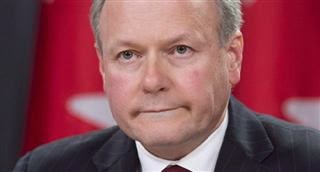
 
Bank of Canada Governor Poloz has been nervous about Canada’s economy, and for good reason, as we have yet to witness the knock out effects of the steep fall in oil prices. He has described Canada’s first quarter performance as "atrocious" and even used the word "recession" when explaining why stimulus is needed. Poloz has proven with his cut at the January meeting that he is capable of surprising the market, so you can’t rule out a move. However, the downtrend in the CAD has done a lot of the heavy lifting that a cut in interest rates would deliver and crude has thus far stabilized around the $50 level. Thus, we believe that he will refrain from cutting rates, wishing to save his bullets for more desperate times, especially if the price of crude resumes its downtrend in search of a new bottom amid swelling oil inventories. Having said that, the CAD may not gain any traction from a pass on a BOC rate hike as the USD continues its bullish break out of its recent consolidation.

 
The week prior the AUD was the worst performer as it was weighed down by the expectation of an interest rate cut by the Reserve Bank of Australia; and when the RBA took a pass the AUD shot up to become the best performer last week on the short squeeze that followed. The second worst performer the week prior, the USD, became the second best performer last week as the market completely unwound the move spurred by the disappointing jobs data at the end of last week. The change in the market’s mindset appears to have placed the possibility of a June Fed rate hike back on the table. Last week’s release of the FOMC minutes and commentary by NY Fed Chief Bill Dudley, a well-established dove, suggested that the Fed was still considering the move towards normalization as early as this summer. This was all the USD bulls needed to hear to break out of its recent corrective consolidation. Lately, any normalization rhetoric by any Fed member (voting or non-voting) seems to fuel USD buying, making every anti-USD rally an easy sell for now.

A bombshell decline in Chinese exports percolated fears that global growth is losing energy and sent undulations through world currency markets on Monday. The USD strengthened for a third day as signals of cooling in China’s economy highlighted the diverging fortunes of the world’s two biggest economies. Figures showing the biggest drop in overseas sales from China for a year and a nose-dive in imports took financial markets by surprise.

The data from China’s General Administration of Customs showed its export sales shrank by 15% in March compared to a year ago and imports fell by 12.7% in a third consecutive month of declines, raising anxieties about wavering domestic demand. Economists had been expecting a 12% rise in exports – yes, you read that correctly! They said the surprise fall may point to weaker than expected first quarter economic growth from Beijing on Wednesday. The drop in exports left the trade surplus in March at $3.1bn, well below forecasts of $45.4bn in a Reuters poll of economists – a 93% difference.

The despair around the trade figures was compounded by the World Bank cutting its growth forecasts for East Asia, with Chinese growth revised down to 7.1% from 7.2% in 2015.


Friday, April 10, 2015

NSF - A Greek Tragedy


The correction in the USD index continues as Friday’s US nonfarm payroll showed that job growth collapsed to its worst level since December 2013. The US economy created only 126K jobs last month, which was significantly less than the 250K that was forecast. The report broke a streak of 12 straight 200,000-plus gains and employment gains for February and January were reduced by a combined 69K. The unemployment rate was unchanged at 5.5% while the labor-force participation rate fell to 62.7%, matching the lowest level in 37 years, as 96,000 Americans dropped out of the labor force in March. All in all, the disappointing report makes it more likely that the Federal Reserve will wait until the end of summer before raising interest rates for the first time since 2006. The news weighed heavily on the USD on Friday causing it to underperform against all the major currencies except one, the AUD.

Fundamentally, the USD will continue to be well supported by the dominate theme of the divergence of monetary policy between the Fed and the rest of the global central banks. The chart technical warns us that the USD has more room to correct in the short term. The daily chart of the US dollar index shows that the 5-day moving average remains below the 20-day moving average and that the momentum indicators have not found a bottom yet.


Over the next couple of weeks, Greece will dominate the headlines as it may not have enough cash to meet its debt obligations. Greece does not have the funds to repay €450m to the IMF on April 9 and also to cover payments for salaries and social security on April 14, unless the Eurozone agrees to disburse the next tranche of its interim bail-out deal in time. We assume that faced with a choice between a default to the IMF and a default to their people that the government will choose to not repay the IMF. If this happens it will be the first time a developed country has ever defaulted to the IMF. While the IMF will probably offer a short grace period before declaring Greece to be in technical default, Greece has other really big funding hurdles to face.

Greece also has Treasury bills totaling €2.4 billion that mature on April 14 and April 17. Most of this debt is sitting in Greek banks, which have been rolling over these bills with emergency funding obtained from the ECB, rather than demanding repayment from the Greek government. However, these two upcoming bills are different because at least €500 million is owed to investors outside Greece who are going to ask for their money back. This is where things could spin out of control – if Greece can’t pay, it would be a default. This would trigger clauses in Greece’s other debt obligations that would require immediate repayment of those debts as well. This has the potential to sends shockwaves around the globe, the ECB, and the remaining depositors in Greek banks.

Keep in mind that this would be similar to what happened in Cyprus as the ECB will force "bail-ins" on the depositors of Greek banks in order for the ECB to recover what is owed to them. We bring this up to demonstrate that Cyprus remains in the euro so it doesn’t necessarily mean that Greece will be kicked out of the Eurozone. However, Greece may choose to leave on its own accord or may be asked to leave by

the remaining members. Either way, the effects on the euro are uncertain to say the least. Initially, the knee jerk reaction will be to sell the euro but it could rise after the fact as markets deem the Eurozone to be stronger without its weakest link.


Wednesday, April 1, 2015

US Consumer Spending Disappointment


The USD continued its correction this past week, which was triggered by the removal of the word "patience" from the FOMC statement. This in turn caused the market to re-evaluate the timing of the Fed’s first rate hike from June to sometime in Q4. The currencies that performed worse than the USD were the AUD, CAD, and GBP as each one had its own cross to bear. The AUD closed at its low for the week as the market is pricing in additional interest rate cuts from the central bank with its next meeting on April 7. The CAD initially received a boost from comments made by Bank of Canada Governor Poloz on Thursday, which suggested that near-term interest rate cuts were unlikely. However, the gains in the CAD quickly dissipated after the sharp sell-off in oil ahead of the weekend. Meanwhile, the GBP was weighed down by low inflation, dovish comments by various Bank of England members, and uncertainty ahead of the May federal election. The latest polls show that Labour has 36 and is now ahead of the Tories with 32, Ukip has 13, Liberal Democrats have 8, and the Greens hold 6. The early polls point to a confusing and complicated post-election power sharing coalition, which will continue to weigh on the GBP even after the May 7 vote.

Lately, it seems that U.S. economic data is consistently missing the mark. We are not saying that the data is bad – not at all – what we are saying is that it has been less than stellar. A quick view of Citi’s Economic Surprise Index captures what we are saying. The index gauges how the actual economic activity compares to expectations – so the data can be very good but miss expectations. Notice how the indicator when compared to Europe and China shows stark contrast.


United States Consumer Spending

There are days when U.S. economic data demonstrate the U.S. economy that is finally getting on track for accelerated growth. Other days, the statistical data demonstrate that we are stuck in an anemic "new normal" that has beleaguered the economy the last few years. Although we rarely get an unambiguous picture from economic statistics, recent reports have proven particularly confusing. With the Federal Reserve now primed to begin tightening monetary policy, there is also a lot riding on what those reports disclose.
 

Encompassing roughly 70% of total GDP, consumer spending has been the life force of U.S. economic growth for many decades. Over this cycle, household incomes have been inhibited by persistent unemployment and the snowballing effects of slow wage growth. To make matters worse, nondiscretionary expenses (e.g., taxes, medical care and educational costs) have climbed much faster than income. Since the average household spends the majority of what it earns, consumption growth has been profoundly constrained by the lethargic growth of discretionary income.

Consumer spending in the U.S. increased 0.10% in February of 2015 over the previous month. Consumer spending in the U.S. averaged 0.55% from 1959 until 2015, reaching an all-time high of 2.75% in October of 2001 and a record low of -2.02% in January of 1987. Personal Spending in the U.S. is reported by the U.S. Bureau of Economic Analysis.
 
Contrary to the expectation that falling energy prices would cause other retail sales to rise, however, the sales statistics actually fell over the last three months. Retail sales declined 0.6% in February after falling 0.8% in January and dropping 0.9% in December. We should not have been surprised. Keep in mind that gasoline sales also count as consumer spending, so the majority of the drop in the retail numbers came from reduced sales of gasoline. For overall consumer spending to rise, Americans need to spend more money on other goods or services than they save on gasoline. That means that unless consumers dip into savings or aggressively spend any additional income they receive, we probably should not see a large increase in overall consumer spending. There is also evidence that much of the growth in other spending will lag the decline of gasoline sales by a several months.
 
The savings on gasoline come at the rate of $10 to $20 per week, as drivers recurrently fill their tanks. While that is enough to fund the purchase of small ticket items like restaurant sales, it would take some time to accumulate savings for larger purchases. That means reduced energy costs should be expected to reduce consumer spending during the initial months of a transition to lower energy prices, but much of the increase in spending on larger-ticket items would likely come after some time has passed.


April First 2015


The Best Birthday Surprise!
or April Fools Prank

The VBCE Team working hard
 

Couple of the guys had to figure out how to build a barrier
(props to the broken hockey stick)
 

Just had to take pictures of our fabulous master piece
 
 
SURPRISE!!!
Happy April Fools Day


Tuesday, March 31, 2015

VBCE Daily Foreign Exchange Update for Tuesday, Mar 31st, 2015


USDCAD climbs to 1.2784 before reversing lower to 1.2660
on better than expected CDN GDP data
USDCAD spot rate: 1.2670 - 1.2675 (AS AT 8:24AM PST)

RANGES:
Asia:
1.2672
to
1.2711
 
Europe:
1.2708
to
1.2755
 
North America:
1.2660
to
1.2784

Technical Support / Resistance:

S2
S1
R1
R2
1.2350
1.2415
1.2784
1.2840

Key Economic Data Releases:
-Canada GDP (Jan): -0.1% (exp. -0.2%)
-U.S. Case Shiller home price indices y/y: 4.6% (exp. 4.5%)
-U.S. Chicago purchasing managers index: 46.3 (exp. 51.5)
-U.S. consumer confidence: 101.3 (exp. 96.0)

Key Event Calendar:

DATE
CANADA
U.S.A.


Apr. 1
RBC manufacturing PMI
ADP employment, Markit / ISM mfg. PMI
Apr. 2
Int’l merchandise trade
Trade balance, factory orders, jobless claims
Apr. 3
Good Friday
Non-farm payrolls, unemployment rate

Yesterday, the uptrend in USDCAD continued after the large reversal from Friday. USDCAD climbed from 1.2596 up to 1.2705 and held near session highs for the balance of the day. Oil fell back below $48 while Bank of Canada Governor Poloz warned that “the first quarter of 2015 will look atrocious.” Overnight, USDCAD climbed to 1.2755 and extended up to 1.2784 earlier this morning ahead of the Canadian GDP data. January data showed that GDP contracted by 0.1%, not as bad as the market had anticipated. USDCAD initially dropped to 1.2730 before finding some support but has subsequently fallen to 1.2660. Oil has bounced from overnight lows and is back above $48. Also, risk aversion flows have subsided as European and North American indices pare losses.
The GBP is the best performing currency with the CAD a close second. U.K. 4TH quarter GDP came in higher than expected at 3.0%. On Friday, the U.S. is expected to add 242,000 jobs after adding 295,000 the prior period. The unemployment rate is expected to hold at 5.5%. Currently, the TSX and the DJIA are down 0.11% and 0.29% respectively. EURCAD is down 1% trading between 1.3588 and 1.3760. GBPCAD is up 0.20%, trading between 1.8764 and 1.8914. JPYCAD is unchanged trading between 0.01055 and 0.01066. Gold is up 0.30% trading between $1,179 and $1,191USD/oz., silver is up 0.50% trading between $16.46 and $16.84USD/oz., while oil is down 1% trading between $47.31 and $48.70.

Sources: Reuters, Bloomberg, FXStreet, RBC Capital Markets, Bank of Canada, U.S. Federal Reserve, CNBC, Forexlive

Friday, March 27, 2015

Meet your CSR: Q&A with Amanda C.

 
You might recognize Amanda from VBCE. Perhaps you've had the pleasure of having her serve you right before you took off for one of your eagerly anticipated vacations. Or maybe she provided you advice on how to help you save more money for your business. What you may not know are all the tiny details of why Amanda is so special to all of her co-workers here at VBCE. 

In this month's post of 'Meet Your CSR' we asked Amanda a few questions to help you get to know her better!

 
Tell us a little bit about yourself
I was born and raised in Hong Kong, and came to Canada in 2007 for University. 
 
What thoughts come to mind when you tell people you work at VBCE?
We offer one of the most competitive rates in town!
 
What is your dream destination for a vacation?
Santorini, Greece! 
 
What extra-curricular activities do you participate in?
I enjoy playing the piano and drawing in my free time. 
 
Favorite song you would listen to on your dream vacation
That would be a Cantonese song by Eason Chan - "Triumph in the Skies"


If you could take one person on a dream vacation with you, who would it be?
It would have to be my boyfriend
 
Tell us about a stand out customer that you have previously serviced
I remember an elementary teacher once came in to buy more than 20 different South American currencies as a teaching tool for her students. The kids must have been fascinated!
 
Give us a Forex tip every savvy customer should know
If you use your Canadian credit card overseas, they'll charge you the bank exchange rates (which are bad) PLUS a 'foreign currency transaction' fee. Only use it for emergency.
 
What is your favorite piece of bullion that you have ever come across
I really like the 5 oz Gold Bar from Swiss Pamp

 
Tell us something about yourself that might surprise some people
I am, and always will be, a die-hard Disney fan. Did I mention I like to read manga too?


Thursday, March 26, 2015

Patience is out the window


Last week the US Federal Reserve removed the word "patience" from their statement with regards to interest rate hikes in the future indicating that they may raise rates sooner than expected. However, they also leave in caveat to further evaluate the economic conditions that let that guide their policy "Even after employment and inflation are near mandate-consistent levels, economic conditions may, for some time, warrant keeping the target federal funds rate below levels the Committee views as normal in the longer run."

Since the announcement the US dollar has lost 2-3% against many of the major currencies contrary the fact the interest rates may rise. What does this mean? Has the market lost faith in the FED guiding policy to an improved economy? One interesting thing to consider is that 90% of the economists surveyed by Bloomberg assumed that the FED would remove "patience" from their policy. So, even though the consensus anticipated the change, the currency market still had some of the most volatility since the "fat finger" flash crash in 2010. Furthermore, much of the fundamental economic data out of the United States is more promising that many of the major currencies that it lost ground to.


EUR/USD finally had some relief from the free fall of the last few months and hit a high of over 1.10 while settling back to 1.0650 before the week ended. The Yen dropped to a three week low at 119.80 while the USD/CHF fell almost 3% (0.9750). That said, the CHF has been so strong as of late, luxury Swiss watch marker Tag Heuer had to drop or freeze prices in many markets to help consumers endure the relative weakness of their currencies.


Tuesday, March 24, 2015

USDCAD falls to 3 week low at 1.2428 and subsequently bounces to 1.2530

USDCAD spot rate: 1.2510 - 1.2515 (AS AT 8:19AM PST)

RANGES:
Asia:
1.2504
to
1.2546
 
Europe:
1.2472
to
1.2534
 
North America:
1.2428
to
1.2530

Technical Support / Resistance:

S2
S1
R1
R2
1.2350
1.2400
1.2617
1.2725

Key Economic Data Releases:
-U.S. consumer price index m/m: 0.2% (exp. 0.2%) y/y: 0/.0% (exp. -0.1%)
-U.S. CPI ex food and energy m/m: 0.2% (exp. 0.1%) y/y: 1.7% (exp. 1.6%)
-U.S. housing price index: 0.3% (exp. 0.5%)
-U.S. Markit manufacturing PMI: 55.3 (exp. 54.7)
-U.S. new home sales: 0.539 million (exp. 0.470 million) % change: 7.8% (prev. 4.4%)
-U.S. Richmond Fed manufacturing: -8 (prev. 0)

Key Event Calendar:

DATE
CANADA
U.S.A.


Mar. 25
 
Durable goods
Mar. 26
Bank of Canada Poloz speech
Markit services PMI
Mar. 27
 
GDP Q4, consumer sentiment index


Yesterday, USDCAD traded from 1.2536 up to 1.2615 before falling to 1.2496. The pairing edged higher to 1.2546 in Asian trade on broad-based USD strength as China manufacturing data came in at an 11 month low and signaled economic contraction. The trend changed course in Europe with USDCAD falling to 1.2472 as oil traded over $48. U.S. headline CPI data was near expectation but the age component was weak. A quick USD sell-off saw USDCAD drop from 1.2510 to 1.2428 – a 3 week low. The move was short-lived with the pairing bouncing back to 1.2530. USDCAD has since eased to 1.2510. Over the past two months, USDCAD has tested the 1.2350 – 1.2400 “quadruple bottom” support area 4 times while recently testing a “double-top” resistance at 1.2835 on two occasions last week.
Sentiment in USCAD appears to be neutral with no clear upward or downward trend at the moment. Currently, the TSX and the DJIA are up 0.75% and 0.14% respectively. EURCAD is down 0.30% trading between 1.3638 and 1.3739. GBPCAD is down 0.70%, trading between 1.8576 and 1.8733. JPYCAD is unchanged trading between 0.01043 and 0.01047. Gold is up 0.14% trading between $1,185 and $1,195USD/oz., silver is up 0.32% trading between $16.83 and $17.05USD/oz., while oil is up 1% trading between $46.69 and $48.53.

Sources: Reuters, Bloomberg, FXStreet, RBC Capital Markets, Bank of Canada, U.S. Federal Reserve, CNBC, Forexlive


Thursday, March 19, 2015

Netanyahu Soundly Defeats Chief Rival in Israeli Elections


Prime Minister Netanyahu Soundly celebrates
his 4th term re-election

 
TEL AVIV — After a bruising campaign focused on his failings, Prime Minister Benjamin Netanyahu of Israel won a clear victory in Tuesday’s elections and seemed all but certain to form a new government and serve a fourth term, though he offended many voters and alienated allies in the process. READ MORE HERE.


Wednesday, March 18, 2015

US FOMC Announcement


Fed Drops Patient Stance
Opening Door to June Rate Increase


“Just because we removed the word patient from the statement doesn’t mean
we are going to be impatient,”

Chair Janet Yellen said in a press conference Wednesday in Washington.