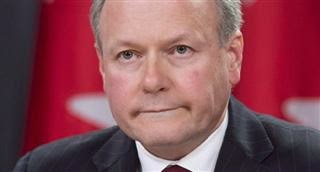
Earlier this month we speculated that the Bank of Canada could cut interest rates after the negative April GDP print; and in last week’s blog post we said that we would be shocked if the BOC didn’t cut because of the string of negative data point after the disappointing April GDP report. Faced with a firestorm of recession talk, the BOC had no choice but to cut interest rates by 25bp to 0.5%. The CAD was promptly sold hard to six years lows. The price action far exceeded our expectations especially after the BOC raised the possibility of QE, if necessary, indicating that this move may not be the end of its easing campaign.
Bank of Canada Governor Stephen Poloz refrained from using the R word by stating that "real GDP is now projected to have contracted modestly in the first half of the year." The BOC also lowered its 2015 growth forecast from 1.9% to 1.1%. For 2016, it expects the economy to grow by 2.3% versus a previous forecast of 2.5%. The economy is not expected to return to full capacity until 2017. As for inflation, the underlying estimate is now 1.5% instead of 1.7%. As you might imagine, the decline in the price of crude oil was the major culprit in the adjusted forecasts.

In the press conference after the policy announcement, Governor Poloz said two things that really
stand out and didn’t seem to receive enough press. He mentioned that he was puzzled that the weaker CAD failed to improve non-energy exports. This statement struck a chord with us because two other countries have had that similar experience. The weak yen has not caused a surge in Japanese exports. Similarly, the weak euro has also not caused an increase in exports as evidenced in the recent Eurozone May trade figures which showed that exports fell 1.5%. We are not sure why this would be puzzling – after all, central banks are engaged in a currency war and no country can gain an advantage if all central banks are counter acting other bank’s moves with matching simulative monetary policy measures.
The other thing that Poloz said was that he expected the Canadian economy to be less in sync with that of the U.S. Are the economic cycles of the two nations that much out of sync? Many economists certainly think so – according to a recent survey in the Wall Street Journal, 82% of economists expect a Fed hike in September. If that is the case, the CAD is in for way more downside that anyone currently expects.
Still the One
 With Greece and the Chinese stock market off the front pages, safe haven flows subsided and the monetary divergence theme reasserted itself as the driving force in the currency markets. Last week, the GBP was the top performer as positive economic data, including accelerating employment earnings, and a chorus of Bank of England members sounding more hawkish about a rate hike. This caused the timing of a UK rate hike to move from Q2 2016 to Q1. Having said this, the U.S. is still the one. No, we are not referring to the 70s soft rock ballad by Orleans but rather the only major central bank that is on course to raise interest rates in 2015. Federal Reserve Chairwomen Janet Yellen was on Capitol Hill last week and she stuck with her script by reaffirming that the central bank was on track to raise interest rates this year. If you remember, this is the very same driving force that prevailed in January of this year as the rate hikers were the top performers while the rest of the countries were moving in the opposite direction.
Apart from the central banks of the US and UK, the other major central banks have either a neutral bias or are in easing mode. The ECB left its policy unchanged at last week’s meeting and reaffirmed that the conditions of low inflation remain. Thus, its policy of bond purchase will remain in place. The Bank of Japan also had its meeting last week and it adjusted its inflation forecast – it no longer expects to hit its inflation target until after 2018 which means that it may need to apply more stimuli in meetings to come.
China reported a slew of key economic indicators last week, including Q2 GDP. It announced that its quarterly GDP came in right on target at 7%, like it always does. However, this time the chorus of investors responding with disbelief was louder than ever. No one believes their data anymore. Leaving this aside, China will probably need to administer more stimulus but more importantly their economy is not growing like it was, which is putting tremendous pressure on commodity prices and the economies of the countries that produce them – Australia, New Zealand, and Canada. Australia was the best performer of the countries in easing mode mainly because their next central bank meeting isn’t until the beginning of August. New Zealand was the worst performer because their next central bank meeting is next Wednesday; and after last week’s disastrous dairy auction, the odds have increased dramatically that the RBNZ will cut rates by 50 bps instead of 25 bps.
Tony Valente
Fred Maurer